
Fat and then Carbs! Latest in Pre-Race Nutrition for Marathons and Ultras

Wondering what to eat to easily get through a marathon or ultra race?

Wondering what to eat to easily get through a marathon or ultra race?

Before you binge out on pasta dinners and bagel breakfasts, you might want to take a serious look at what researchers are reporting about “carbo-loading” before a marathon or long endurance event. The days of high-carb diets may be over – well, make that modified — for athletes who want to perform their best on race day, or so says the March 2013 issue of Competitor magazine. New research is suggesting that a low-carb diet may actually have benefits because it trains an athlete’s muscles to be better fat burners.

When muscles can access fat as fuel during a race, glycogen stores are spared and saved for use later down the road – this means “hitting the wall” or “bonking” can be delayed and perhaps even avoided completely. But don’t swear off pancakes just yet. Training day after day on a low-carb diet can leave a runner feeling sluggish and slow because glycogen stores never get topped off. Plus, there hasn’t been any irrefutable, one hundred percent conclusive proof that removing carbs from the diet improves endurance performance. In fact, one study at the University of Birmingham in England found that low-carb runners (41% carbs) reported more fatigue and showed reductions in performance than their high-carb counterparts (65% carbs) during intensive training runs.
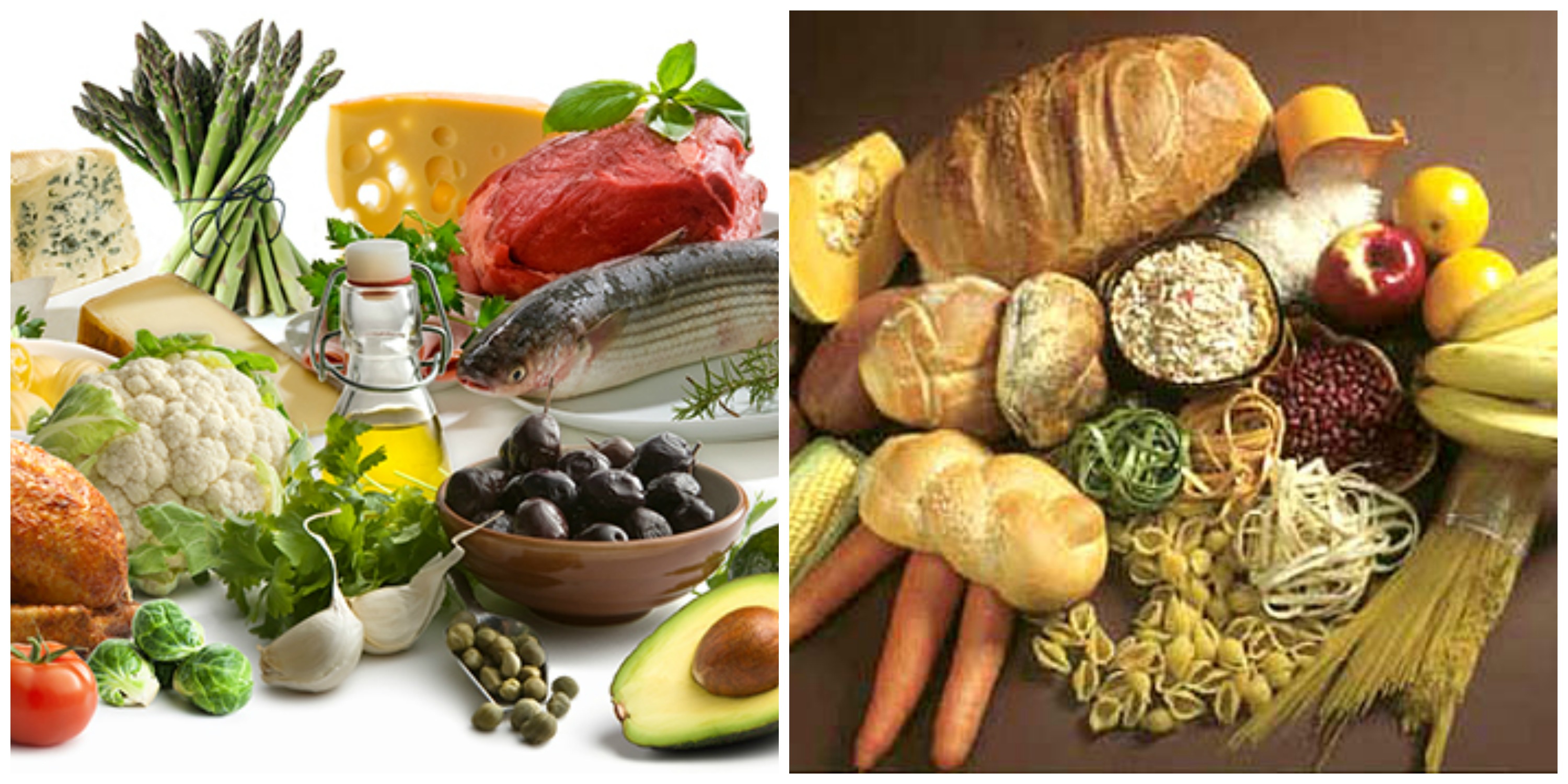
Good fat-loading choices on left. Good carb-loading choices on right.

Good fat-loading choices on left. Good carb-loading choices on right.

A new pre-race nutrition paradigm that combines the two ‘loading’ approaches is being recommended by experts in the sports performance field.  Here’s the plan in a nutshell. About two weeks out from an endurance event, aim to get about 65 percent of calories from fats and continue this high-fat intake for 10 days. This “hall pass” to eat fats doesn’t mean you can pig out on pizza and ding-dongs all day, or really any day. Quality fats from healthy oils, nuts, meats, avocados, whole milk, cheese, eggs, and fatty fish are what should be on the table. During this phase, your body will learn how to tap into fat stores for fuel; and, your training won’t suffer much because you’ll be tapering down anyway.

After 10 days of eating low-carb, high-fat foods, switch to a traditional “carbo-load” diet that incorporates 70 percent of calories from carbohydrates for the next three days. This ensures that your glycogen levels are as high as they can be and are raring to go on race day. Stay away from processed carbs and too much sugar. Instead, top off your tank with high-quality, healthy carbs including whole-grain pastas, breads, and rice along with plenty of fruits and veggies (but, of course, cut the fiber intake 24 hours before event).

A study conducted by the University of Cape Town in South Africa implemented this 10-day ‘fat-load’ followed by 3-day ‘carbo-load’ plan on a group of experienced cyclists. After a moderate two-hour warm-up, the athletes were able to complete a 20k time trial 4.5 percent faster following the new diet protocol. What do you think? Is it worth a try?

To recap:

  • Day 14 through Day 5 before event: High-Fat, Low-Carb
  • Day 4 through Day 2 before event: High-Carb, Low-Fat
  • Day 1: Race!

 To give you an idea of what a “High Fat, Low Carb” and a “High Carb, Low Fat” days look like, I’ve come up with a sample menu based on an approximate 2,500 calorie diet.
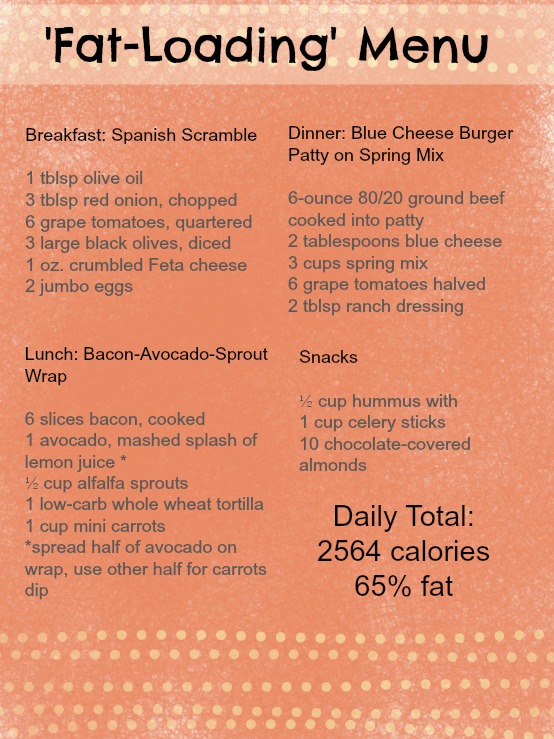
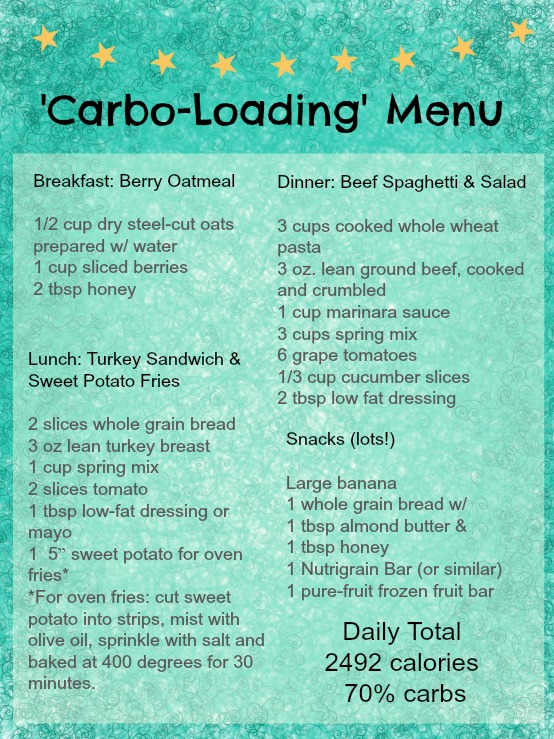
Jennifer Fisher - thefitfork.com - fat-loading menu


jennifer fisher - thefitfork.com - carbo loading menu

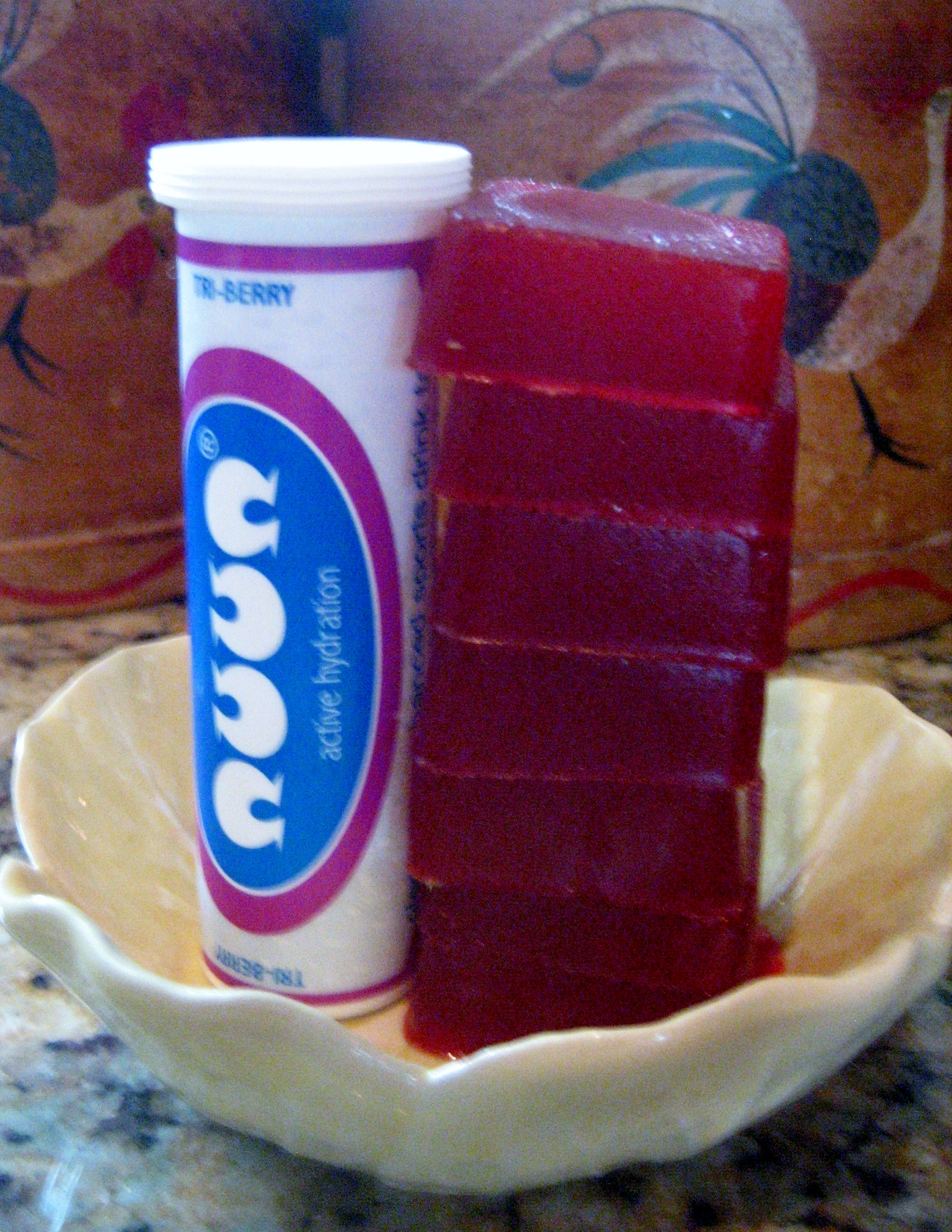
Oh, Yes I Did! Nuun Tri-Berry Electrolyte Jellies

Nuun recipe perfect for Hood To Cost Relay - Team After Nuun Delight

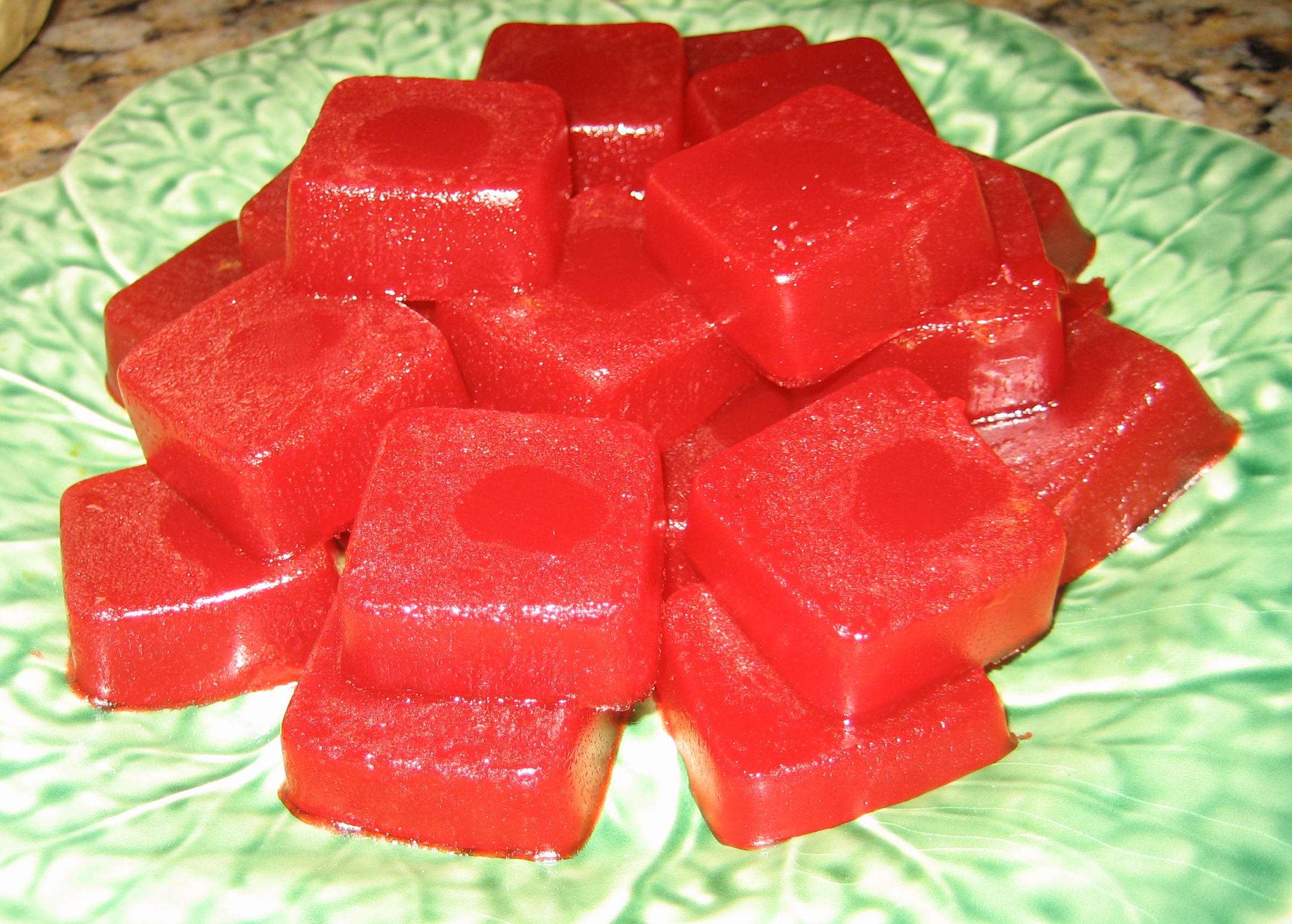
Nuun electrolyte jellies are both a novel and nutritious recipe.

A Jell-O dish of some sorts has long been on the menu at our Easter gatherings, think big 60s style molds suspending little bits of fruit and marshmallow. But, hey, this is 2012 and I need some Jell-O that’s a little more ‘on-the-go’ friendly and addresses my electrolyte needs this week as I finish up training for the Boston Marathon. So hmmm, scratching head . . . why not combine my favorite sports drink tab (Nuun) with a mixture of plain and flavored gelatin to create some mighty-fine, finger-food fuel? Can’t wait for the reaction when I set down this masterful remix of our time-warped gelatin salad tradition on the big Easter buffet.

I’ve been drinking Nuun for years out on my long runs, the subtle yet seriously yummy flavors don’t overwhelm with sweetness – in fact, Nuun tablets are sugar-free with no artificial flavors or colors, providing optimal hydration without all those carbs that sometimes upset my stomach during a race. Now, these jellies do have some sugar in the recipe . . . a girl can’t live by sodium, magnesium and potassium alone!

I have used plain ole table sugar (sucrose) as studies are showing it is really the best best when it comes to endurance and so does this study.  For example, you can’t really ingest enough glucose and metabolize it at a rate fast enough to keep up with your needs in an endurance event and fructose is linked with tummy troubles. So, I’ve just stayed with sugar.  If you want to swap in coconut sugar instead, that will work well too — it’s 80% sucrose and free of fructose.

This recipe uses Nuun Tri-Berry tablets, but after the Boston Marathon, I am going to experiment more with this  recipe and make a ‘sweet victory’ version using Lemon Chai from the Natural Hydration line along with lemon Jell-O and a litt levodka . . . stay tuned for that!

Nuun ‘Tri-Berry’ Electrolyte Jellies

Jello made with Nuun Tri-Berry tablets

• 1 env. (1/4 oz.) unflavored gelatin
• 1¼ cup cold water
• 3 NUUN Tri-Berry sports drink    tablets
• 1/3 cup sugar
• 2 Tbs. cornstarch
• 2 pkg. (3 oz. each) sparkling wildberry flavor gelatin*

Pour cold water into small bowl, drop in Nuun tablets and let dissolve. Sprinkle unflavored gelatin over Nuun-gelatin mixture, let stand 1 min. Mix 1/4 cup sugar and cornstarch in medium saucepan. Gradually whisk in Nuun-gelatin mixture until blended. Bring to boil on medium heat; cook 5 min., stirring constantly. Remove from heat. Add dry gelatin mixes; stir 2 min. until completely dissolved. Pour into 9×5-inch loaf pan** sprayed with cooking spray. Refrigerate 1 hour or until firm. Remove from mold by holding pan upside-down over cutting board, it will slip out. Cut into 24 pieces.

*you can use any mixture of Nuun and flavored gelatin that you prefer
** In lieu of the loaf pan, I used a 24-ct ‘brownie bite’ silicone baking mold.

Nuun Tri-Berry Hydration

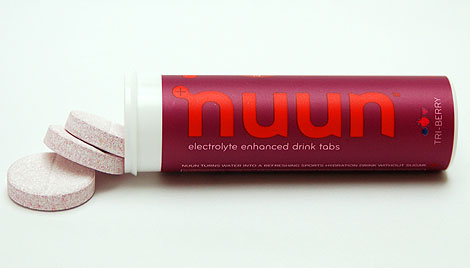
This is what the current Nuun Tri-Berry container looks like!