2Fer: When to Mix Music with Running & WODs | Koss Fit Series Headphones

thefitfork running with music

Wondering if you should rock out with music while you run or workout in the gym? Poll your friends or Google some scientific studies and you’ll quickly discover that this ongoing debate has persuasive arguments booming out of both sides of the proverbial box. Some athletes wouldn’t dream of running a single step or lifting a dumbbell without pumping up the volume, while other athletes turn their noses up at anything but the unplugged, purist approach. There is no arguing that music has a beat that makes the body want to move. On the other hand, there are legitimate reasons to keep your entire mind “on call” when you run or workout.  As usual, I support the best of both worlds. That is, knowing how to incorporate music into training on occasion and then being able to ultimately perform without it. And, make sure to read down to the bottom because I’m going to fill you in on the really awesome KossFitClip” and “FitBud” headphones that are designed by women, for women.

matthew_mcconaughey_running

When To Mix Music and Exercise

To Enhance Performance with “Up-Tempo: Songs:  Music makes a great substitute for that absent training partner who is just a little bit faster or stronger than you. When I don’t have a friend on the track to chase down and have to finish speed workouts alone, I will often wear headphones to help me kick it in high gear. I always wondered how music made me feel like I just ate my Wheaties. Well, according to a 2012 study, music can act as a metronome to help maintain a steady pace, reduce false steps and decrease energy expenditures. The researchers at Hallam University found that participants who cycled in time to music required 7 percent less oxygen to do the same work as their music-free counterparts.  According to another music and exercise researcher, Costas Karageorghis from the School of Sport and Education at London’s Brunel University, the “sweet spot” for using music to enhance performance is between125 – 140 beats per minute. So, pick up-tempo songs, not slow love ballads!

 To Get Motivated with “Favorite” Songs: On days when it’s hard to get out the door, cranking up the iPod and exercising to a few of my all-time favorite songs helps me readjust my mood. This isn’t just a touchy-feely claim; there is real science behind this type of attitude adjustment. A recent study showed that subjects who listened to music they reportedly “loved” triggered the release of dopamine, the famous feel-good neurotransmitter. But, when the same participants listened to generic music selected by the researchers, dopamine levels remained stagnant. In addition to being the brain’s reward and pleasure center, it’s no surprise to find out that dopamine not only enables our brain to see rewards, but sends the signals we need to take action and move toward achieving them.

To Trick Yourself into Beating Fatigue: When your body starts sensing signs of extreme exertion, it notifies your brain to take a break. But, the use of music can keep you going despite rising levels of lactic acid in the muscles, a pounding heart beat and increased sweat production.  Experts say that music overrides the physiological feedback for the brain’s conscious attention – it’s a diversion in the same way that the phlebotomist’s office always has an interesting photo to look at while you’re getting blood drawn. However, during intense fatigue, music can lose its magic to override the suffering. Anyone who’s ever hit the wall in a marathon knows there’s not a song ever sung that can trick your mind out of the pain.  However, the right music can elevate your mood and persuade you to ride out the waves of exhaustion, rather than giving up.

no music

When Not to Mix Music with Exercise

When Coming Back from Injury: If you are rehabilitating from an injury, it’s best to work out without music. Experts say that listening to music can distract an athlete from the exercise at hand, encouraging a ‘push-through-the-pain mentality’ – even if it’s at a subconscious level. Instead of disassociating yourself from distress with music, try turning inward and listening to your body’s feedback.

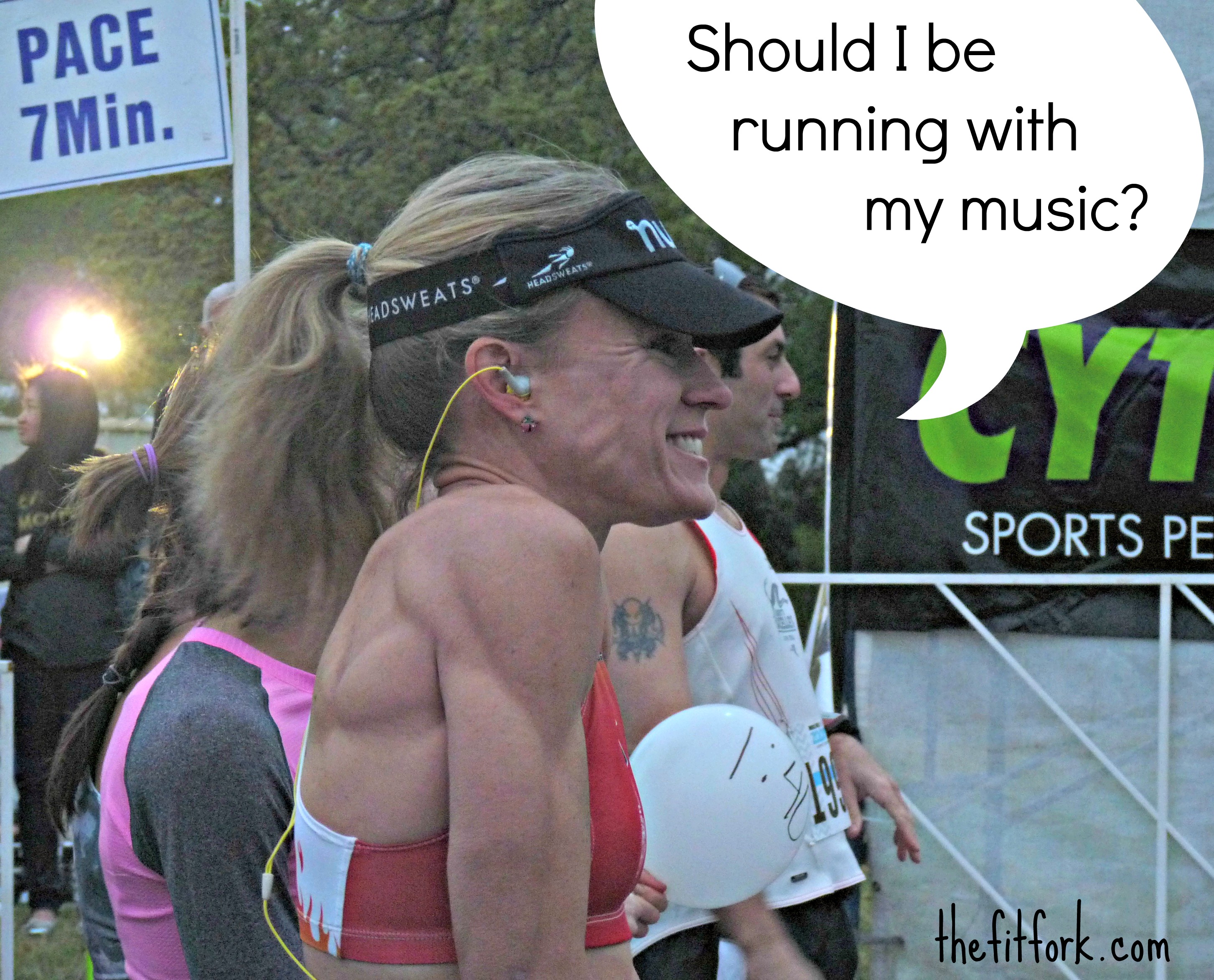
When Competing: When competing, the best athletes seem to have every sense focused on achieving top performance without the aid of any external stimulus such as music. It’s true that listening to music prior to your start is a great way to calm down – or get pumped up. But, during the actual competition, music has the potential to become a disastrous liability, a disadvantage which trumps any performance benefit you could potentially have achieved with it. Think how stupid you would feel to lose your lead because you didn’t hear the footsteps of a runner challenging you from behind or you missed an important call from a referee and ending up with a DQ. Or, even just the inconvenience of your device losing its battery charge halfway through a marathon and being stuck lugging the dang thing to the finish line. Also, be aware that some sports governing bodies don’t allow the use of music, viewing it as a “performance enhancer” that gives unfair advantage on the playing field. For example, US Track & Field (USTF) bars the use of headphones or music for athletes who are competing for “awards, medals or prize money.”

When in Potentially Hazardous Situations: Put safety above your playlist. Use common sense when it comes to running or exercising with headphones on. If the volume is cranked and you are totally tuned out, you may not hear oncoming traffic, unfriendly dogs, or potential criminals. In races and competitions, you may miss important directions from the officials and not benefit from the thrill of hearing the cheering crowd.

Also:

Keep it Courteous: Also remember that one man’s music is another man’s migraine. If you’re in the gym, garage, or running with a speaker vest and playing your music “out loud” remember to be courteous and keep it at a reasonable volume.


A Review of KOSS Fit Series Headphones 
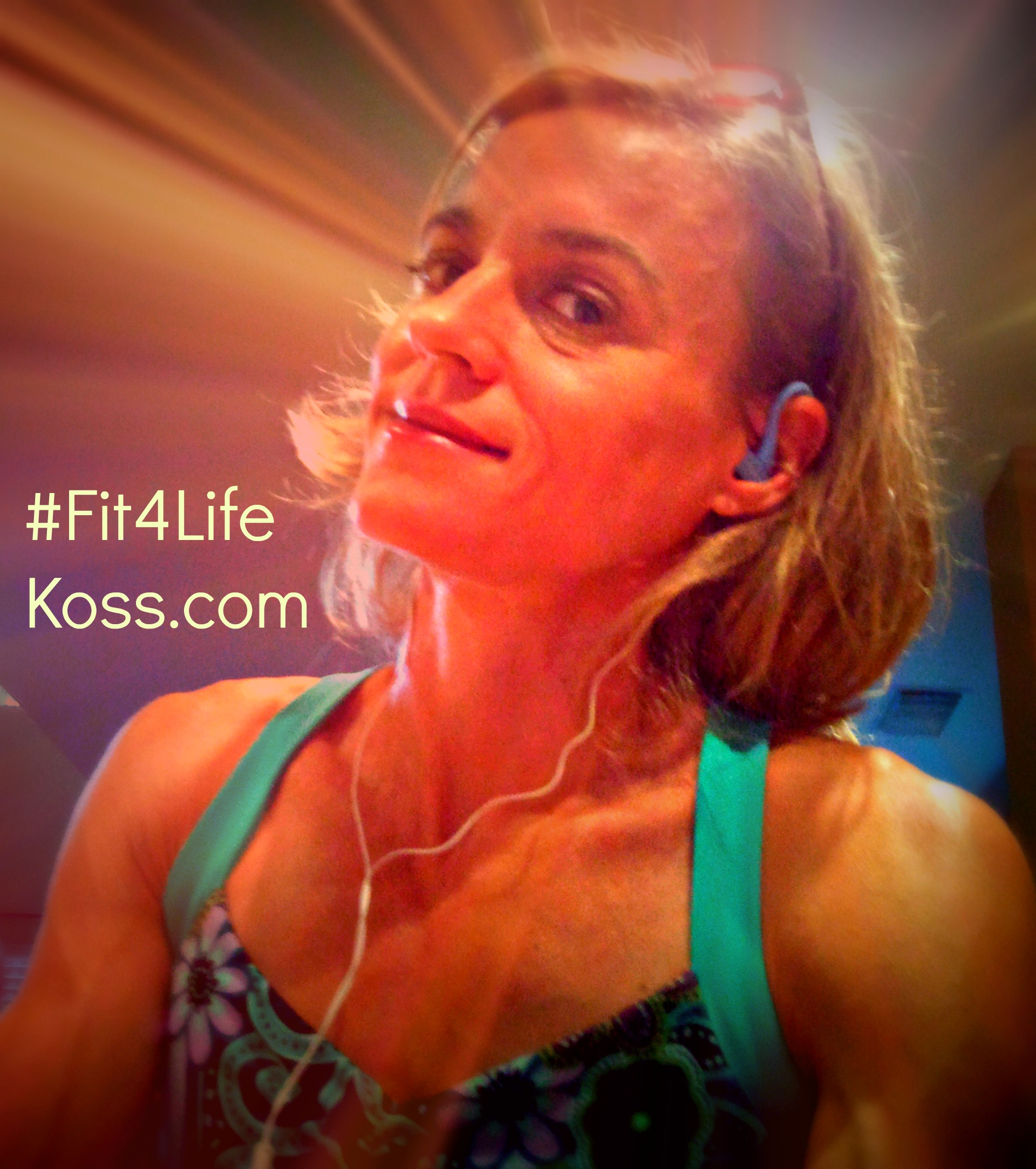
So, I think we should all mix music with our exercise at least every once in a while. If you agree, you’ll want to have some great headphones to maximize the listening experience. Nothing worse than a crackling, cheapo pair of headphones that wants to slide out of your sweaty ears. Or, worse yet, won’t even fit in your ears. Well, earlier this month, the Koss Fit Series hit the market and they sent me both of their new models to try out– the FitClips and the EarBuds.

So, what’s great about the Koss FitClips? These headphones use an original design to ensure that perfect fit we women want; they measure in 33% smaller than the standard earbud. The speaker element rests comfortably in the ear and comes with one of three sizes of ear cushions to make sure a girl is getting the perfect ear “seal.”  The ear clip is soft and flexible and after running 8 miles in it this morning, not once did it fall out or slip thanks to both the design and sweat-resistant coating. In fact, I forgot that I was wearing them! There are five vibrant colors available; mine are a pretty blue that reminds me of the Texas Mountain Laurel that I see on my trail runs.
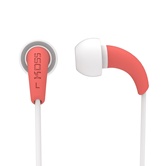
Koss FitBud

Koss FitBud


Koss FitClip

Koss FitClip

Another thing to love about the Koss Fit Series, Darra Torres is their spokeswoman. Named as one of the “Top Female Athletes of the Decade” by Sports Illustrated, the swimming sensation is about my age and such an inspirational role model. Darra believes that it’s never too late to accomplish your dreams and that determination trumps age – I love this! These are words to live by!

If you’re interested in a pair, head over to Koss and use the code Fit4Life for $5 off plus free shipping.

What’s Beautiful 3.0 Challenge – Taking Fitness & Teamwork to Epic New Level

I am so excited to be part of a sponsored campaign for the Under Armour’s What’s Beautiful challenge — together we’re redefining the female athlete by encouraging you all to set fitness goals, reach those goals and then set your sights once unimaginable dreams with all your new found badassery.

under armor costa rica whats beautiful

Join me in the challenge; you know want this friendly kick in the rear to get your spring and summer fitness journey in gear.  It’s easy –just go to the What’s Beautiful challenge page, set a personal goal you can accomplish starting today through the next 10 weeks and then document yourself making it all happen – the sweat, the suffering and the smiles! You’ll be in the running for awesome swag from Under Armor along with a chance end up at a yoga and relaxation retreat in Costa Rica.

If you’re not a one-woman wolf pack (really, who is?), then join or start a team once you’ve registered. The motivation, accountability and empowerment, these are all the benefits of surrounding yourself with the support of a team.  I’ve started a team called “Fit, Fearless and Forty-Something” and I’ve seen other teams I might join like “Boston Bound” among others. If you don’t see a team that matches your goals, then go make one!

whats beautiful fit fearles and forty something team under armour

Teams of athletic women will . . . . motivate, inspire and keep you accountable!

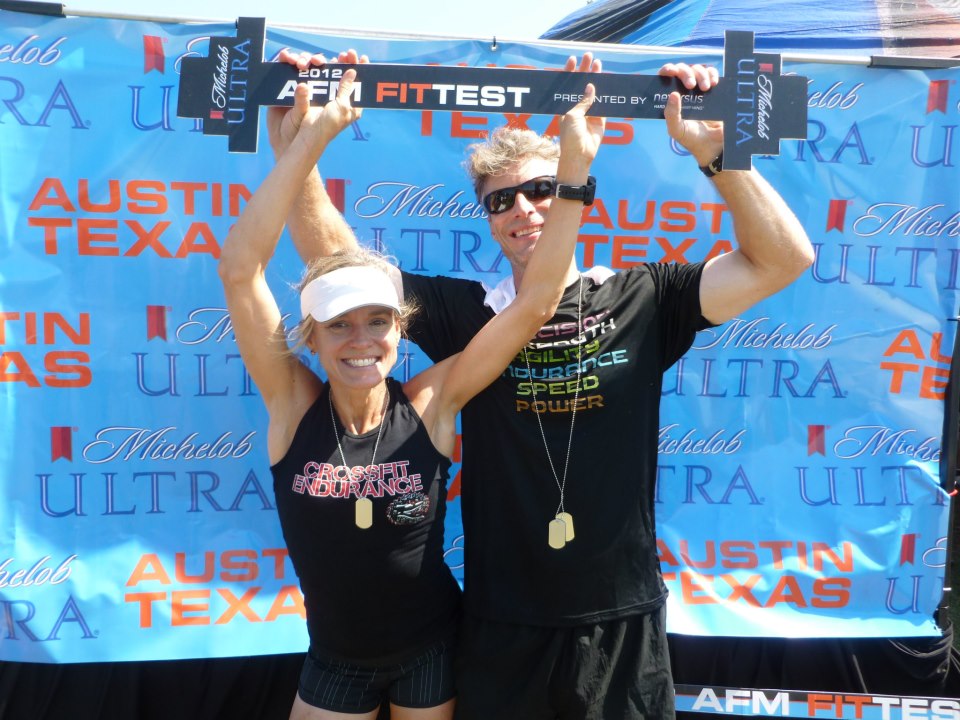
My goal is to win my age group (40-49) at the Austin Fit Magazine “FitTest” this summer. That’s right; I’m setting the goal high. I competed last year with a hurt back and placed 7th, so it’s not unrealistic – but still something to work hard towards.  The day-long challenge has 10 events, ranging from a medicine ball throw to a one mile run, plus (new this year) an additional two mystery tests! I’ll update my What’s Beautiful profile page every week with the test element I’ve been working on the most.

2012_06 afm fittest afterwards

Me and the hubby celebrating after last year’s AFM FitTest!

What is your goal going to be? If you don’t have a goal, get a goal!  It could be crossing the finish line of a 5k, getting a new PR at the dead lift, or accomplishing a new skill like a back bend or butterfly stroke – or making the roller derby team!  If you don’t want to go it alone, make a team goal – walking a combined 1000 miles over the 10 week challenge, logging 10 hours of group planking, or winning the summer softball league championship. I’m just throwing ideas out there!

Soooo .  . will you join Under Armour’s What’s Beautiful challenge?   #IWILL #WhatsBeautiful

CrossFit + POSE: My Secret Weapon to Running 50 Miles on a Whim

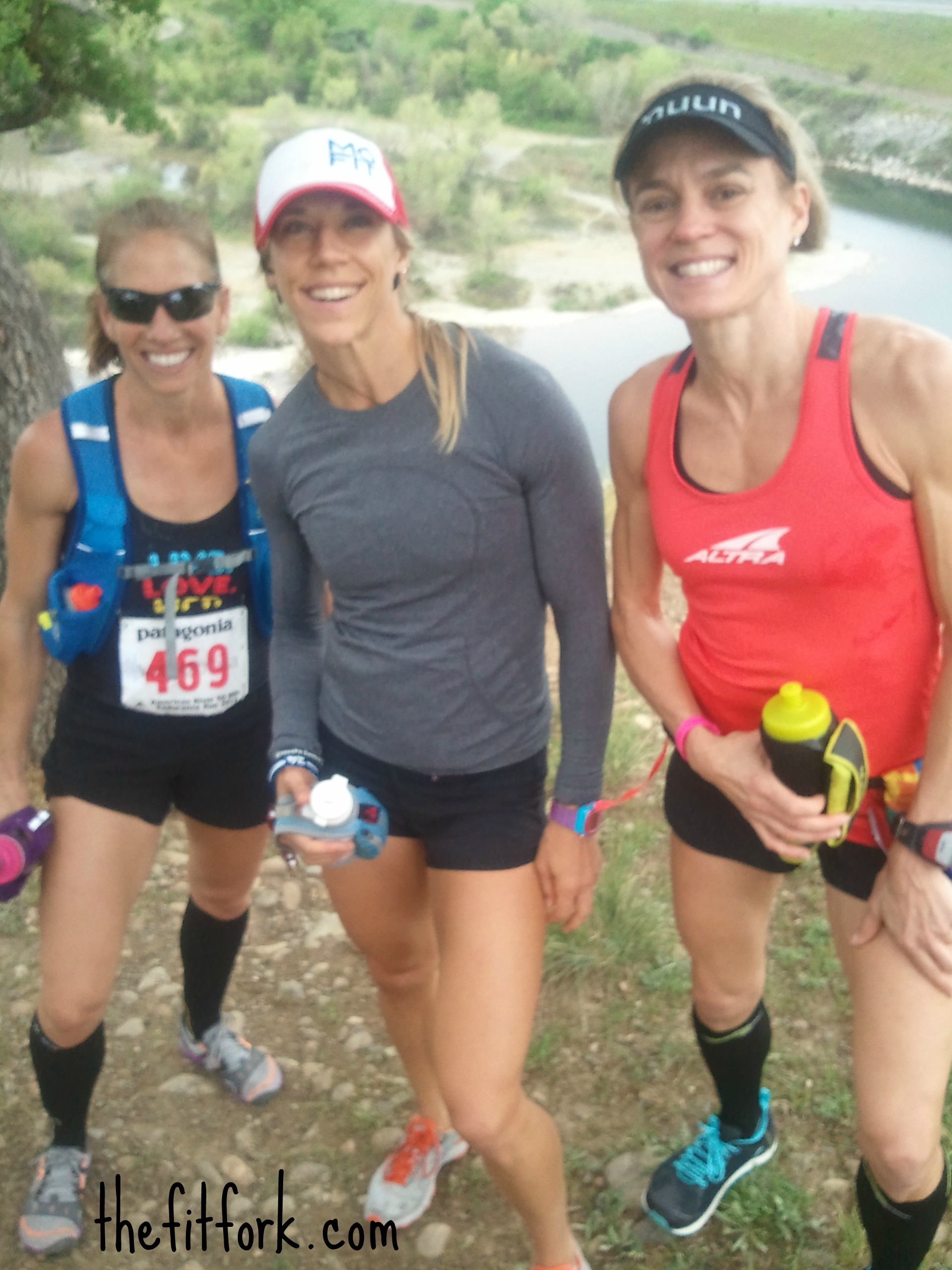
SAMSUNGA few weeks ago, Valerie Hunt, my good running friend (who, conveniently, happens to be a coach for both POSE Method and CrossFit) dragged me across the country to pace her in the first half of an ultra-marathon. When she first told me of the plan to run the American River Endurance 50 Mile Run in Sacramento, CA, I put my hands up to my ears as in “la-la-la, I can’t hear you.” I thought either she was teasing, dehydrated and in a delusional state, or perhaps a little more masochistic than I realized.  But my initial displeasure didn’t faze her one bit; you see, it’s not the first time I’ve dug in my heels when called to go outside my comfort zone — that scary place on the other side of “what I THINK I know. “

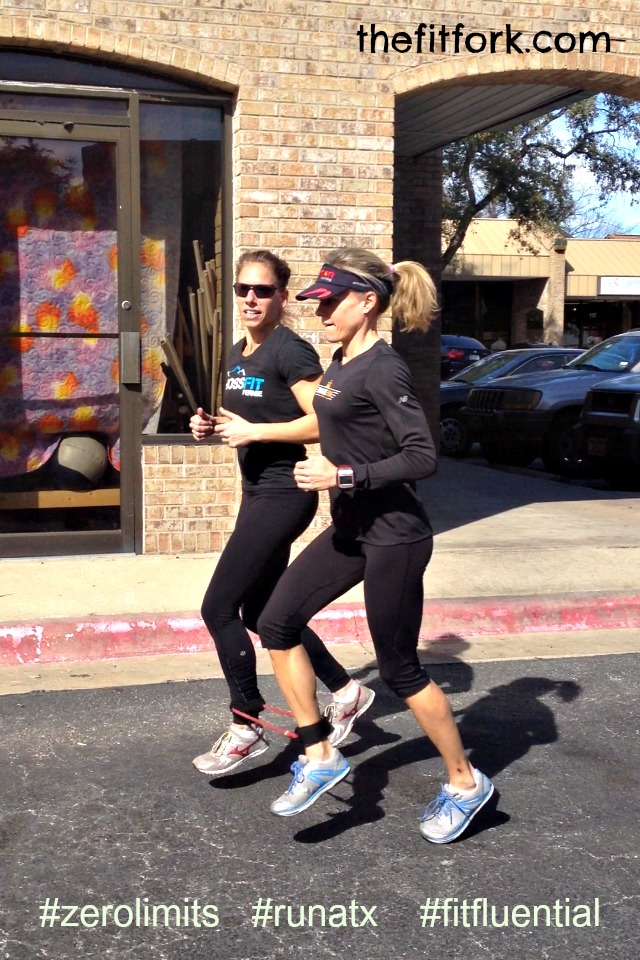
For example, when she first instructed me in POSE Method to improve my running mechanics, I cringed, I bitched, I belly-ached.  All those “falling” and “pulling” and “fore-foot” landing drills felt foreign, awkward and, quite frankly, unnecessary. After all, I KNEW how to run, I had been running for 15 years at that point — and quite well, thank-you-very-much.  Oh yeah, except for those times when I was sidelined because of ongoing foot, ankle and hip injuries. Eventually, I let her coach me through the principles of POSE and we checked in on form at least two times a week; now the movements are as natural to me as “the old way” and I run injury-free with more efficiency and  less impact than ever before.

Valerie and Jennifer practicing POSE Method drills,

Valerie and Jennifer practicing POSE Method drills,

This entire example of KNOWING (make that NOT KNOWING) what is good for me in running mechanics was almost entirely replicated with my debut into CrossFit almost two years ago – only the running drills were replaced with functional WOD exercises and my objections were even more on the defense. I’d tell my friend, “I DO strength train, you know, I sit there in the gym and do bicep curls and leg-extensions – but nothing too hard-core, I don’t want to bulk up.”  After her eye-rolling, Valerie took off her POSE coach hat and put on her CrossFit coach hat (although actually, the two hats can be worn teamed up together!)and patiently began taking baby steps with me, teaching me the basic movements used in CrossFit. On those mornings after, when I awoke too sore, I would conveniently “forget” about CrossFit and focus on my running.

However, the realization that I needed to marry the two together forever came when she took me to CrossFit Endurance Camp a few months later.  Because “endurance” was in the name, I figured I’d be a natural because, after all, I was a hot-shot runner and therefore a stellar athlete (insert sarcastic tone). Who cares that I could only do one pull-up and thought a “Good Morning” was a yoga position. However, after spending a weekend at camp getting one-upped in everything from pull-ups to presses, I was humbled enough to admit that maybe I DIDN’T KNOW what was best for me, my body and my running.

And, that’s when I committed to making it all work together, the CrossFit and the running and the being good to my body. And, today I’m happy to report that I didn’t bulk up (in fact, I am leaner than ever), I have broken all my previous Master’s PRs in every distance from 5k to marathon, and have had virtually NO injuries to speak of. Even when I was much younger, one of my biggest aches and pains after a race would be my lower back; well, no more !  But probably most impressive thing to me is that I feel like I’m prepared to do anything, at any time.

2013_04 america river torin shoes

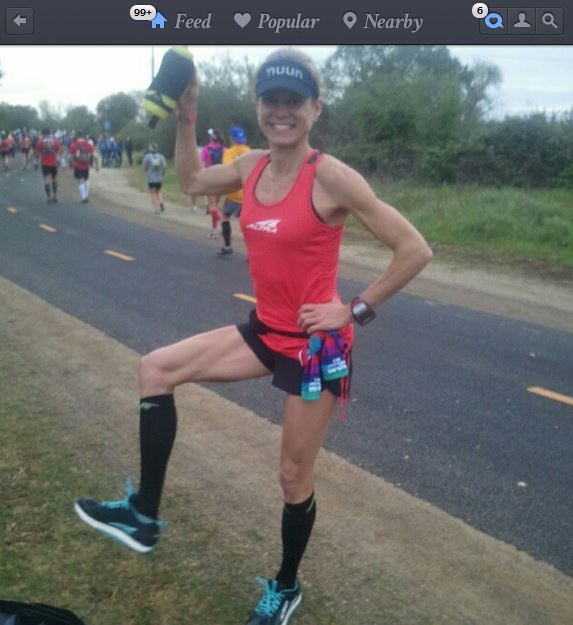
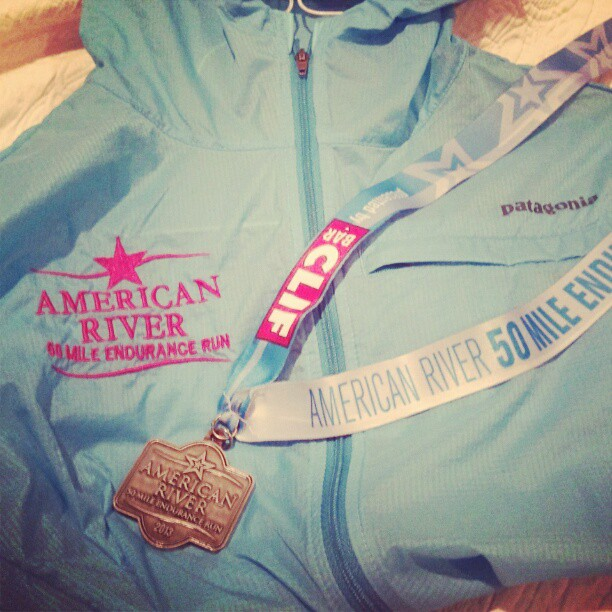
Yup, you guessed it! After agreeing to pace my friend and coach, Valerie Hunt, and CrossFit Games star, Carey Kepler, for 20 miles during the American River 50 Mile Endurance Run, I decided to make my own go for the finish line. Lets’ do this; why not? I was about 18 miles into the run when I decided it would be no big deal to just complete the whole thing. Who cared that I had never run a step past 26.2 miles and my latest long run in ages had been just 13 miles? With no training, no special preparations, no pre-race worrying, I was free to just run and enjoy. As the three of us picked up the pace on our final miles to the finish, we looked and felt strong. We reveled in the cheers from the spectators and high-fived our awesome friends who jumped in for a few hundred yards after crewing us the entire way along the course. These were uphill miles and very few participants were still running at this point. While my legs were dead tired at the end of the day, I finished the race easily and recovered quickly enough to place high in a 10 mile race the next weekend.

american river run bling

I have no doubt that it was the combination of all-over functional fitness (from CrossFit) and efficient running mechanics (from POSE) that gave me the wherewithal to run 50 miles on a whim. Because CrossFit is all about “constantly varied, high-intensity, functional movement” and POSE focuses on moving your body in a series of efficient positions (hello, POSE is not just for running it can be applied to any human movement), the two team up perfectly to keep me prepared to do nearly anything that comes up on the spur of the moment – like running 50 miles – without too much trouble!  I don’t know if I would ever run 50 miles again, but it is a thrill to know that I could at any time!

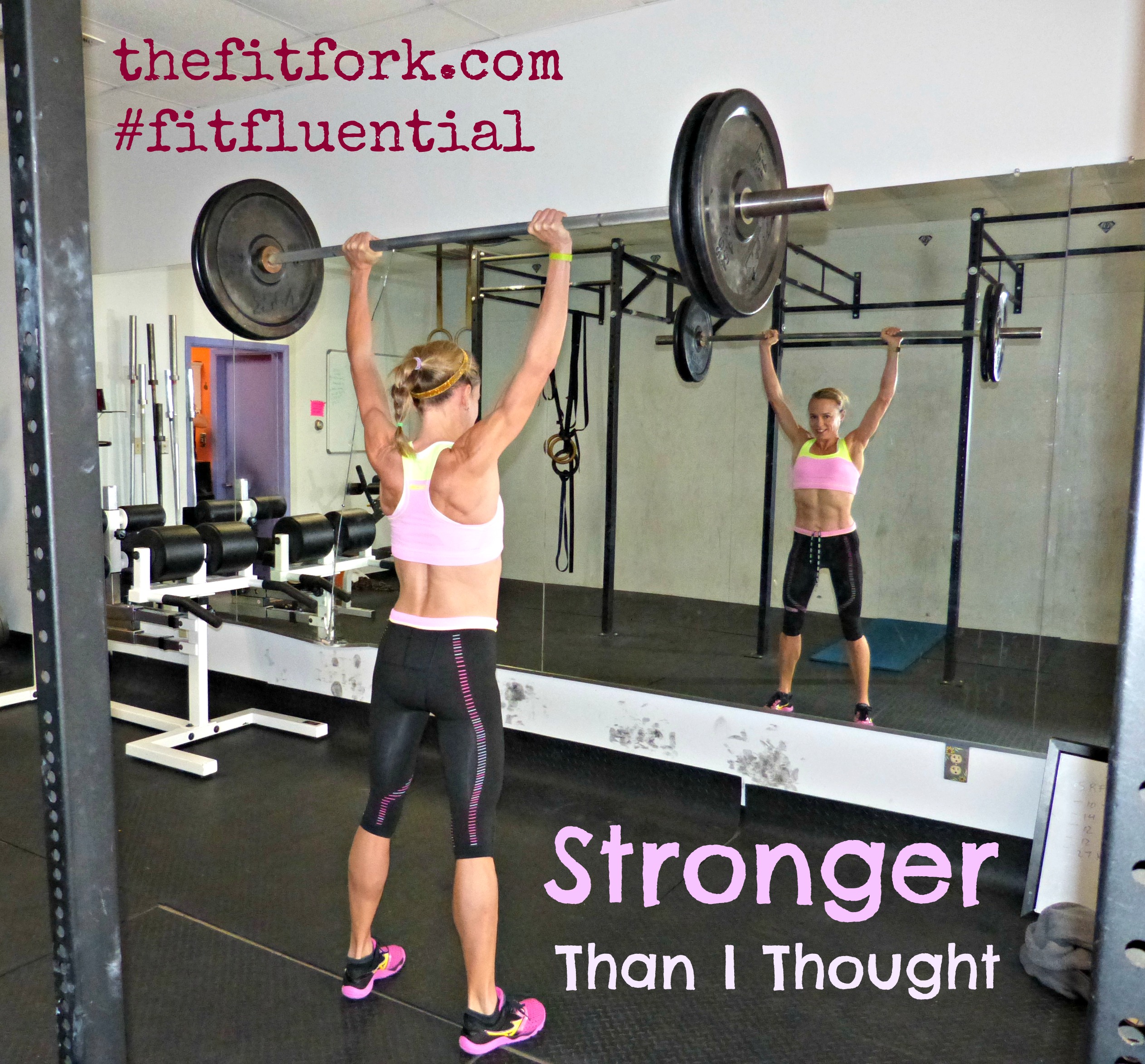
jennifer fisher_thefitfork_stronger than I thought


Fat and then Carbs! Latest in Pre-Race Nutrition for Marathons and Ultras

Wondering what to eat to easily get through a marathon or ultra race?

Wondering what to eat to easily get through a marathon or ultra race?

Before you binge out on pasta dinners and bagel breakfasts, you might want to take a serious look at what researchers are reporting about “carbo-loading” before a marathon or long endurance event. The days of high-carb diets may be over – well, make that modified — for athletes who want to perform their best on race day, or so says the March 2013 issue of Competitor magazine. New research is suggesting that a low-carb diet may actually have benefits because it trains an athlete’s muscles to be better fat burners.

When muscles can access fat as fuel during a race, glycogen stores are spared and saved for use later down the road – this means “hitting the wall” or “bonking” can be delayed and perhaps even avoided completely. But don’t swear off pancakes just yet. Training day after day on a low-carb diet can leave a runner feeling sluggish and slow because glycogen stores never get topped off. Plus, there hasn’t been any irrefutable, one hundred percent conclusive proof that removing carbs from the diet improves endurance performance. In fact, one study at the University of Birmingham in England found that low-carb runners (41% carbs) reported more fatigue and showed reductions in performance than their high-carb counterparts (65% carbs) during intensive training runs.

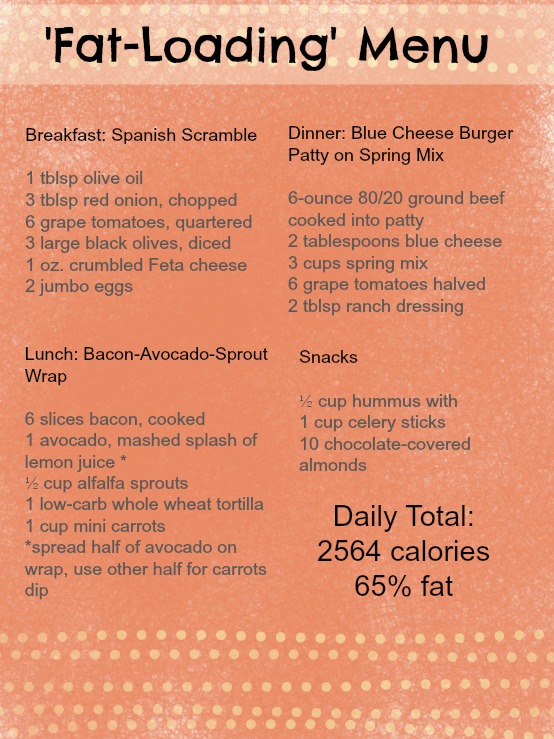
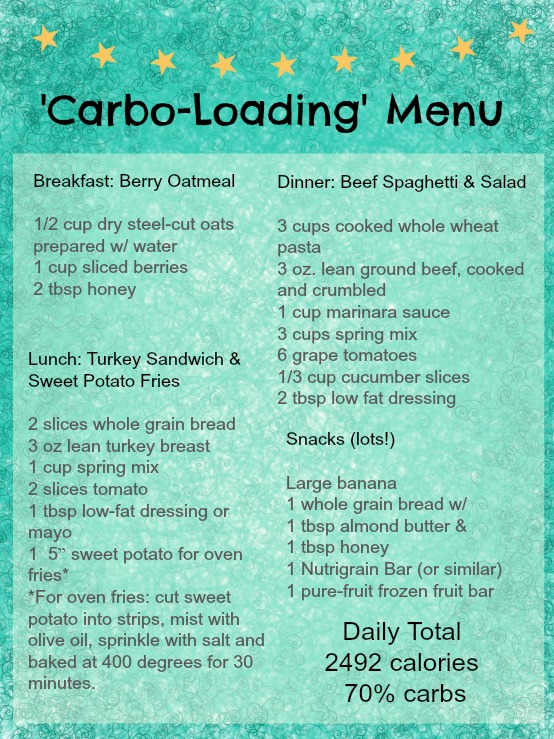
Good fat-loading choices on left. Good carb-loading choices on right.

Good fat-loading choices on left. Good carb-loading choices on right.

A new pre-race nutrition paradigm that combines the two ‘loading’ approaches is being recommended by experts in the sports performance field.  Here’s the plan in a nutshell. About two weeks out from an endurance event, aim to get about 65 percent of calories from fats and continue this high-fat intake for 10 days. This “hall pass” to eat fats doesn’t mean you can pig out on pizza and ding-dongs all day, or really any day. Quality fats from healthy oils, nuts, meats, avocados, whole milk, cheese, eggs, and fatty fish are what should be on the table. During this phase, your body will learn how to tap into fat stores for fuel; and, your training won’t suffer much because you’ll be tapering down anyway.

After 10 days of eating low-carb, high-fat foods, switch to a traditional “carbo-load” diet that incorporates 70 percent of calories from carbohydrates for the next three days. This ensures that your glycogen levels are as high as they can be and are raring to go on race day. Stay away from processed carbs and too much sugar. Instead, top off your tank with high-quality, healthy carbs including whole-grain pastas, breads, and rice along with plenty of fruits and veggies (but, of course, cut the fiber intake 24 hours before event).

A study conducted by the University of Cape Town in South Africa implemented this 10-day ‘fat-load’ followed by 3-day ‘carbo-load’ plan on a group of experienced cyclists. After a moderate two-hour warm-up, the athletes were able to complete a 20k time trial 4.5 percent faster following the new diet protocol. What do you think? Is it worth a try?

To recap:

  • Day 14 through Day 5 before event: High-Fat, Low-Carb
  • Day 4 through Day 2 before event: High-Carb, Low-Fat
  • Day 1: Race!

 To give you an idea of what a “High Fat, Low Carb” and a “High Carb, Low Fat” days look like, I’ve come up with a sample menu based on an approximate 2,500 calorie diet.

Jennifer Fisher - thefitfork.com - fat-loading menu


jennifer fisher - thefitfork.com - carbo loading menu

On your Mark, Get Set, Press – Deadlift – Box Jump! CrossFit Open 13.2 Workout


Am I going to the CrossFit Games in 2013? Uh, no. But, just because I’m not going to compete to be the “fittest woman on earth,” doesn’t mean I can’t follow along with some of the workouts being dished out in the Open Competition which started last week. In fact, when I scale the weight-lifting elements down a bit, these WODs become a useful cross-training tool in my quest to become the “fastest woman on earth,” or maybe we should make that, “the speediest old lady in the neighborhood.”

So, I headed down to Fit & Fearless CrossFit to give WOD 13.2 an “unofficial” shot. This classic CrossFit triplet features shoulder to overhead, deadlifts and box jumps. Because the weights and time cap are moderate, this workout is focuses more on pure work capacity and pushing through the discomfort rather than raw strength or technical prowess. That being said, I still decided to cut the weight by more than one-half so I would not kill myself and have fresh enough legs to race a 5k this weekend!  I scored 290 with my weight Rx’d down, compare that to Iceland Annie who scored a legit  361!  Okay, I can run faster than her. Maybe.
Here’s the 13.2 WOD:

Complete as many rounds as possible (AMRAP) in 10 minutes (first weight male, second female):

  • 5 Shoulder to overhead, 115 / 75 lbs
  • 10 Deadlift, 115 / 75 lbs
  • 15 Box jump, 24 / 20 inch

So, if you’re looking for a little more information on how to perfect these moves, just get started, or tweak them to meet your fitness goals, here are some resources:

The deadlift builds strength in your legs, hips and back, perfect muscles to target for runners! An intermediate goal for women is to be able to lift 120 percent of body weight, that’s about my limit. However, some of these competitive CrossFit gals, can lift 160 to 200 percent bodyweight! In the video above, CrossFit coach Valerie shows a modified Band Resistance Dead Lifts for beginners. Or, you can check out an earlier post I did on Dead Lifts that even has a really cool diagram of all the muscled used in the move.

jennifer fisher_thefitfork_box jump ponytail

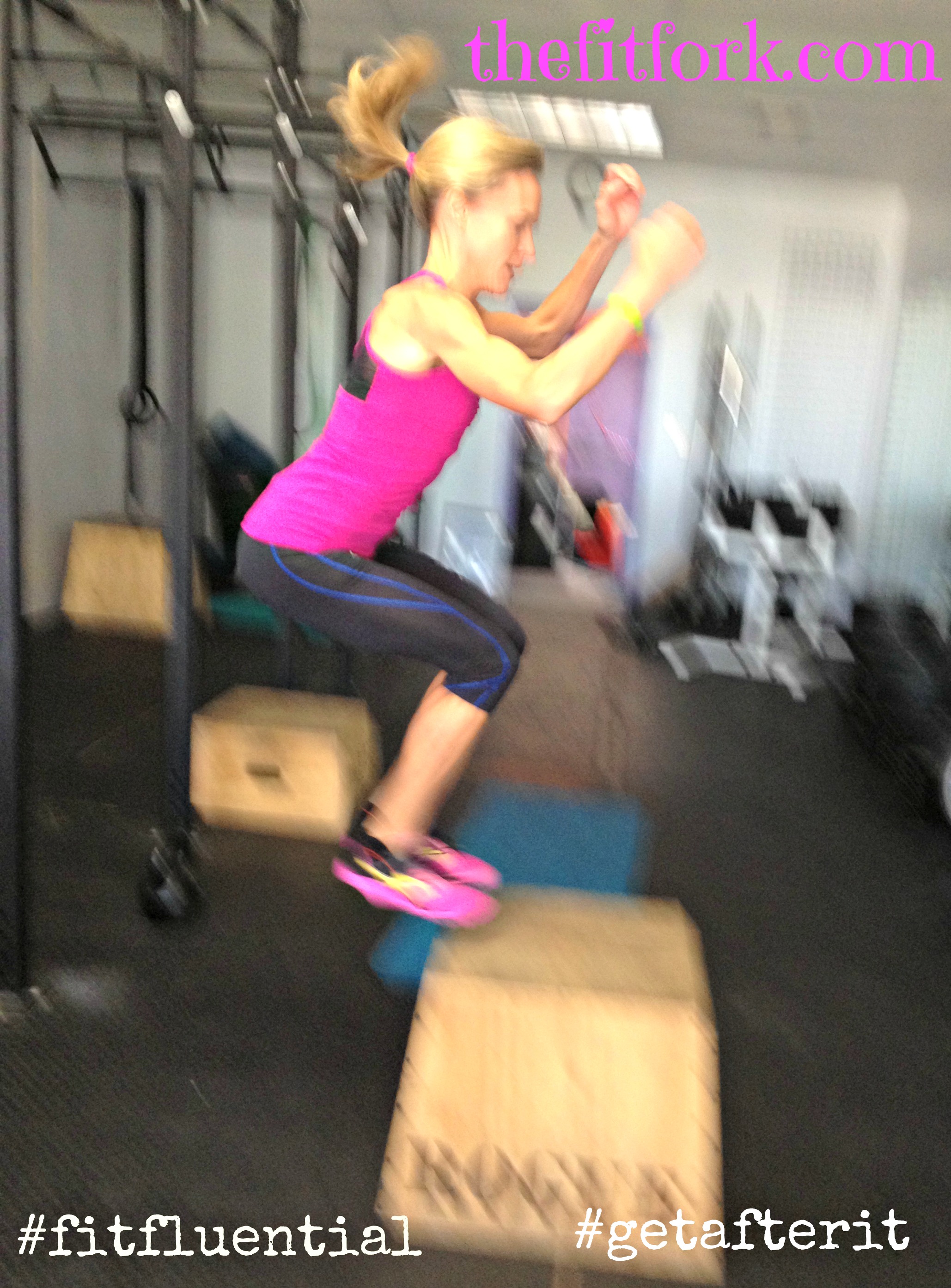
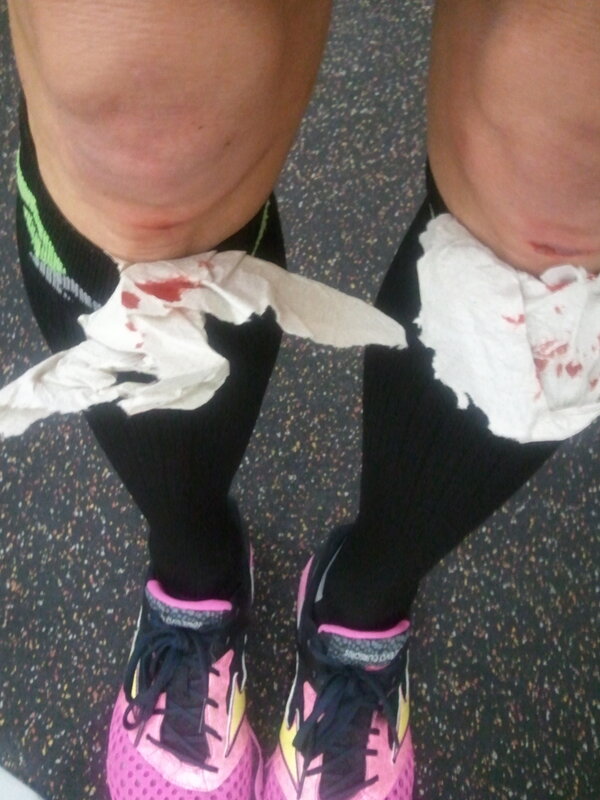
The box jump is an explosive move of plyometric power. If done right, box jumps can improve your running power by strengthening quads, hamstrings, gluts and calves. If done wrong, well, see my bleeding knees below! Carl Paoli (from GymnasticsWOD.com) and Kelley Starrett (from MobilityWOD.com) give their tips on how to tackle a box jump with the best body position possible. Check out their helpful tips on perfecting the box jump. The key take-away for me is to remember to fully extend the hips at the top of the box and then land with feet fairy close together to prevent a “torque dump.”

box jumps gone bad

Oops, box jumps gone bad!


P1000098

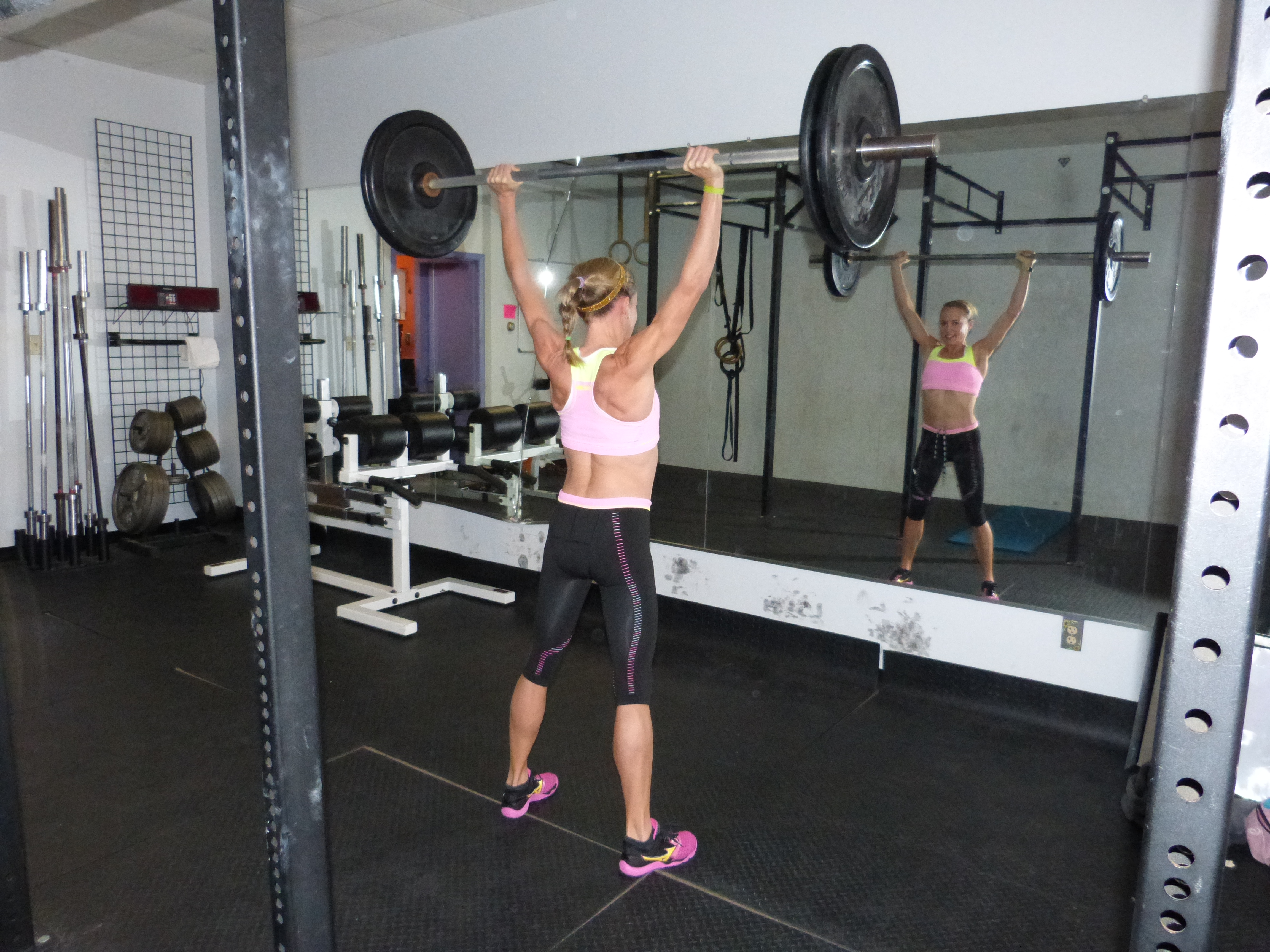
Technically, a shoulder-to-overhead could be one of three overhead lifts, the strict press, the push press or the jerk press. Even though it seems like you only need strong shoulders to succeed here, you actually use your entire body, including a lot of core, to get the bar up overhead in a fully-extended position. And, I could go on all day about how improving my core strength has helped my performance (and recovery) in running. The Tabata Times has a good explanation of these shoulder-to-overhead lifts and how to perform them properly.

So, have you done the 13.2 WOD yet? What was your score?  If not, do you use any of these moves (deadlift, press, or box jump) in your training?  Let me know in the comments ! Hint — get to the comments by clicking the little “speech bubble’ at top of post.