Shaking it Up! Salt Strategy for Humid & Hot Marathons

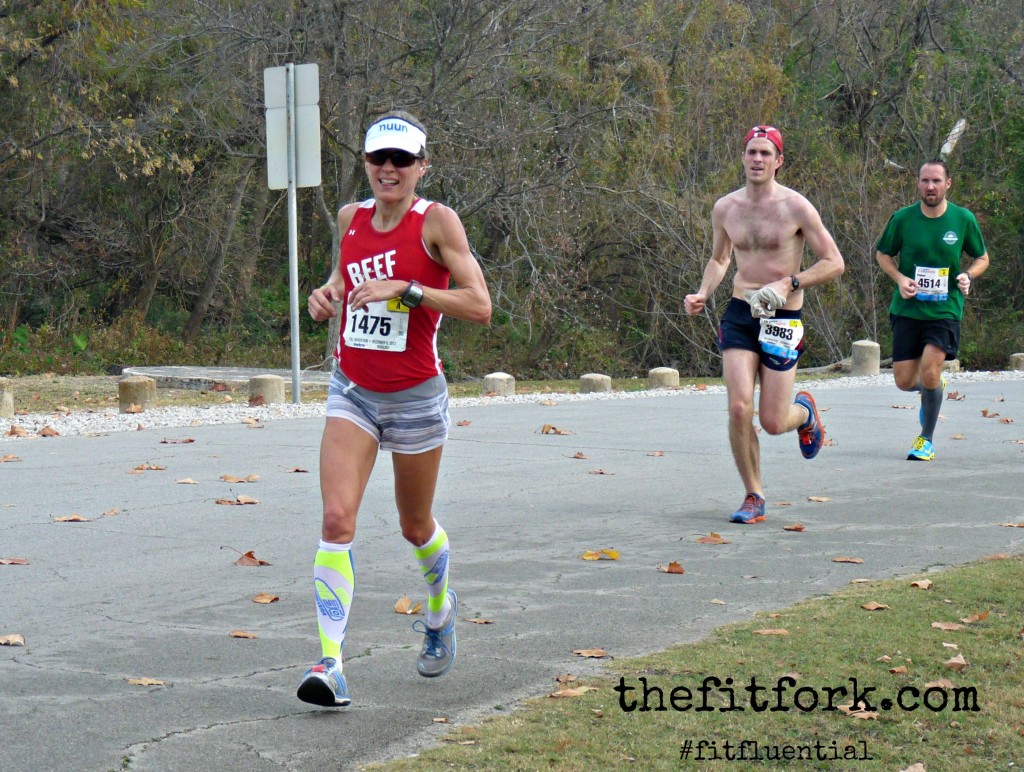
Hanging on despite weather for 14th female, 1st in AG.

I love hot weather; people think I’m weird that I’d prefer to be in 100 degrees rather than an allegedly comfortable 70 degrees. Even during Texas summers, I’ve been known to keep the air-conditioner set at 82-ish degrees and will sometimes sneak away like a lizard to go warm up in a sun-baked car.  But, for the record, I do not like to run races in high heat – let me repeat, I DO NOT LIKE THAT, no sir-ee!

But why does Mother Nature like to mess with me? I ask for crisp, cool and dry race weather (is pleading for 50 degrees every time too pushy?) and I get quite the opposite. This year alone, I ran the Boston Marathon at 90 degrees with straight up sun and both the Rock and Roll San Antonio and the Dallas Marathon in unseasonably warm and extremely humid conditions.

If you’re a runner, you probably know what happens if you sweat a lot in a race, especially in a longer events like a marathons or ultras. You get dehydrated, experience debilitating muscle cramps, and some athletes are even subject to hyponatremia (low blood sodium) which presents with confusion, lethargy, vomiting and other serious complications.  Just look in the mirror after a long, hot run; you can actually see the sodium crusted up on your face and clothing.

People have different amounts of sodium in their sweat, but the average runner loses about 1000 milligrams of sodium per liter (33 fluid ounces) of sweat. That being said, the majority of electrolyte replacement drinks only offer about a quarter to half of this amount per liter as a replacement. That means most people are sweating out more salt that they are taking back in. That’s why it’s a good idea to supplement with additional sodium and electrolytes above and beyond your drink, especially if you are a heavy sweater or the weather is especially extreme.  An article in Runner’s World, “Know Thy Sweat Rate” takes you through all the steps to accurately figure out how much you perspire during exercise.

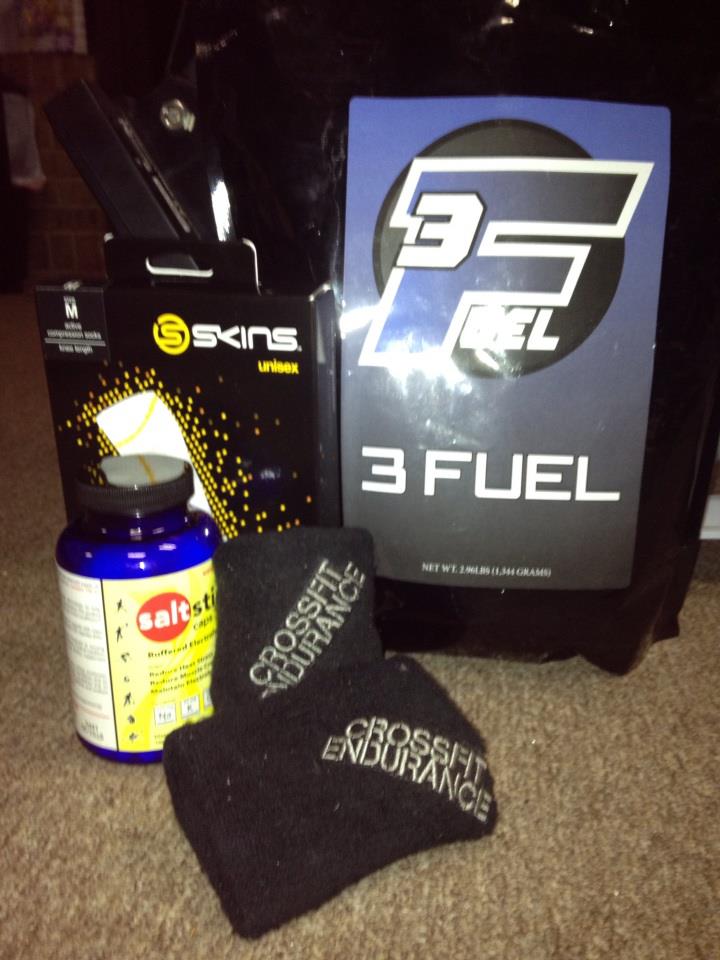
Experts suggest taking two to four salt-electrolyte capsules per hour during endurance events. At the Dallas Marathon, I used the Salt Stick brand and it worked well, but there are many other options. Look for products that contain sodium, calcium, magnesium and potassium.  I rationed out my capsules by taking one every 30 minutes and washing it down with my bottle if I still had one in hand or a splash of water at the hydration stops.

In addition to slowing dehydration and cramping, research also shows that sodium helps move fluids out of the stomach to enhance digestion, a plus if you have digestive problems. To me the perk about taking in the salt stick was that I didn’t have to drink as much Gatorade on the course – too much sugary sports drink seems to give me GI distress.  I did take in one bottle of Gatorade, but then my other bottle was filled with 3Fuel, a great product backed by CrossFit Endurance that fuels athletes with a proven micronutrient strategy of carbs, protein, and fat.  By the way, if you’re interested in trying the 3Fuel, you can get 10-percent off your purchase with the code 3FHUNT  .

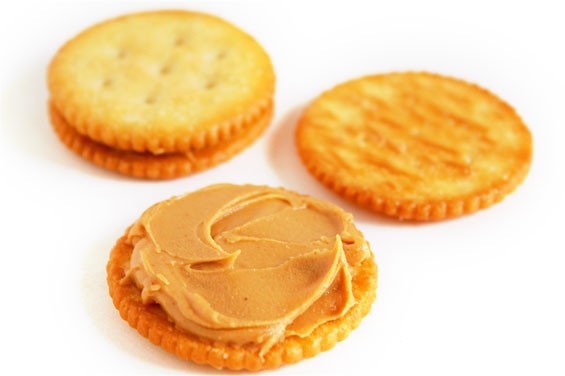
Another interesting nutritional choice I made for the Dallas Marathon; instead of eating my traditional energy bar breakfast, I ate salty peanut butter crackers instead (again, more salt and less sugar).  No cramping, no potty stops – I was a happy runner who made it to the finish line without bonking!


Marathon Taper Week: What to Eat and Drink

I’ve put in (most) of the mileage, knocked out the speed workouts and juggled my already-crazy life around marathon training; why does it still seem so hard to taper?  I’m not talking about the kind of “hard” that other runners complain about, those A-types who miss the daily pavement pounding and the quantitative atta-boys doled out by stopwatches and training logs. Personally, I sort of like the fewer and more leisurely-run miles gifted to me during the tapering period before a marathon.  Ahhhh.

But, I start to freak out about food; perhaps “obsess” is a better description.  Normally, I’m really not much of a diet worry-wart. I typically eat with my health in mind, but don’t have a problem splurging when the opportunity presents. But, between the fear of bonking (again), the panic of finding an on-course port-a-let due to GI distress (again), or the dread gaining enough weight in one week that I can’t fit into my cute racing shorts (hasn’t happened yet, but who knows), all I can think about this week is what I should be eating and drinking. Although I’ve run plenty of marathons over the last 20 years and should know every trick of the trade (but always forget), I pulled together this list of tips to remind myself how to be as prepared as possible with my nutrition for the week leading up the marathon.

Match calorie input with energy output. Since most training plans have runners reducing mileage 30-50 percent during the last two weeks, calorie intake should be tweaked down as well to avoid real weight gain (however you will temporarily gain some water weight as I mention below). For me, this is only about 250 fewer calories a day in the last week, and is as easy as cutting out my bedtime snack. However, remember that the taper period is not the time to restrict calories with weight-loss in mind; you need to rebuild muscle fibers and top off your glycogen tanks. So, if your body is legitimately saying it’s hungry, eat!

Don’t be a slave to the scale. If you are eating a nutritiously-sound diet and have cut out most of your now-unnecessary refueling snacks, you are not going to pile on the pounds.  That being said, you may actually gain two to four pounds of water weight during the tapering process just by “carbo-loading.”  For ever one ounce of glucose put into reserves, your body stores another three ounces of water.  So a diet a little heavy in carbs the week before, is going to make you retain water – a good thing to prevent dehydration and bonking on the course.

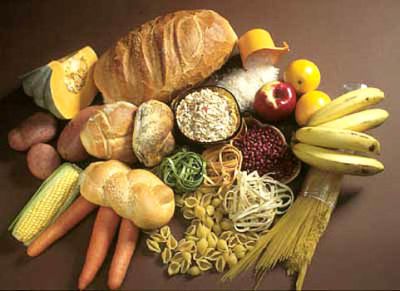
Make clean carb choices.  An unhealthy, high-carb diet includes empty calories found in sugary, processed foods such as candy, cookies and pastries. The simple carbs found in these snack food spike blood sugar in a crash-and-burn manner unlike the longer-lasting energy found in complex carbohydrates (foods such as whole grains, fruits and vegetables, and low-fat dairy or soy products). Plus, often too many of the simple carbs are also paired with high-calorie fat, sabotaging your ability to efficiently “carbo-load” while still getting enough protein.

Eat your meat (or alternative protein). Just because the food focus during taper week is on complex-carbohydrates and increasing glycogen stores, the importance of lean protein should not be overlooked. Protein has essential vitamins, minerals, and amino acids that aid in the building and recovery of muscle tissue. Also, many protein choices, such as lean beef, are loaded B vitamins which help efficiently convert those carbohydrates I’ve been talking about into the fuel needed to make it through the marathon. Don’t know how much protein to eat? The average adult requires 0 .8 grams of protein per kilogram (2.2 lbs) of body weight per day, equating to about 55 grams for a 150-pound person. Runners and other endurance athletes should aim for approximately 1.2 to 1.4 grams per kilogram (2.2 lbs), or 82 to 95 grams for a 150-pound person.

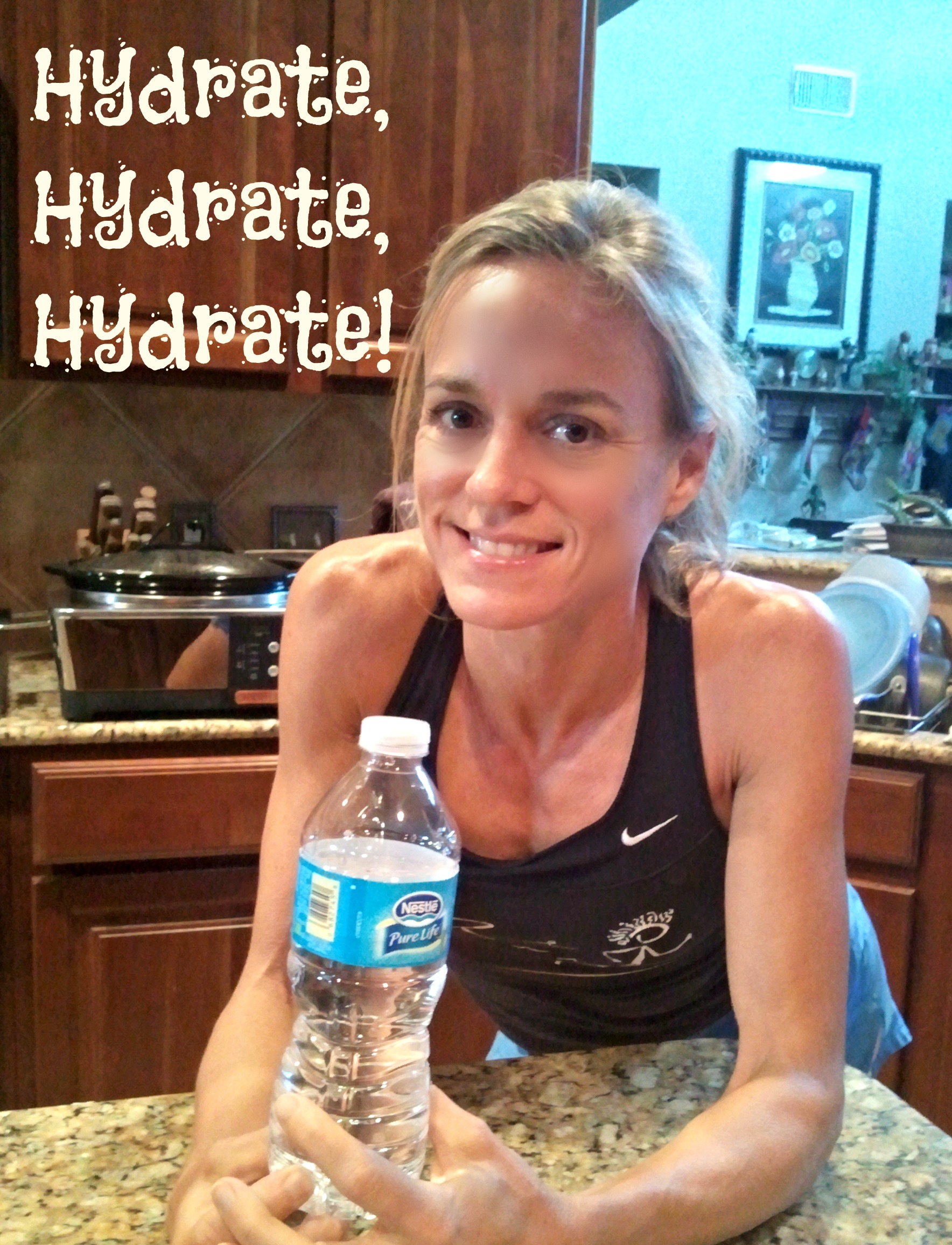
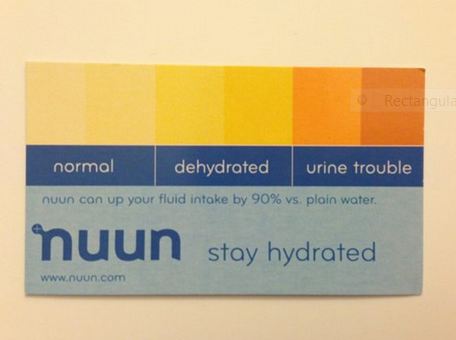
Time to hydrate. Taking in enough fluids before the marathon is vital and will help you keep from becoming dehydrated on the course (although, you’ll still have to take in fluid during the actual race). Don’t let cold or overcast weather trick you into thinking you don’t need to drink; I once became severely dehydrated in 35-degrees and pouring down rain. Water is a great choice for hydration, or the sports drink of your choice.  This is not the time to experiment with your beverages, stick to the tried-and-true sports drink used during training runs. Experts warn about over-hydrating (hyponatremia) which can throw off your electrolyte balance and put your life in jeopardy; listen to your body and don’t force water, if you’re not thirsty.  To get a benchmark on your level of hydration, check out this “pee chart” below which shows you the optimal range of urination colors.

Forty-eight hours and counting.  Two days out from the marathon, I suggest continuing the complex-carb and protein diet, but reduce the amount of fiber being consumed. You don’t want stuff moving through you too fast, if you know what I mean. The day before the marathon, consider eating your largest meal at lunch, not dinner. This gives you more time to digest the food, leaving you nourished but not weighed down in the morning. Continue to hydrate, but avoid alcoholic beverages and too much caffeine which could both leave you dehydrated. Also, if you are a “sweater” or the weather is warm, drink your preferred electrolyte beverage and/or salt your food more than usual.

Eat More Protein, Run Zooma, Feel and Look Good!

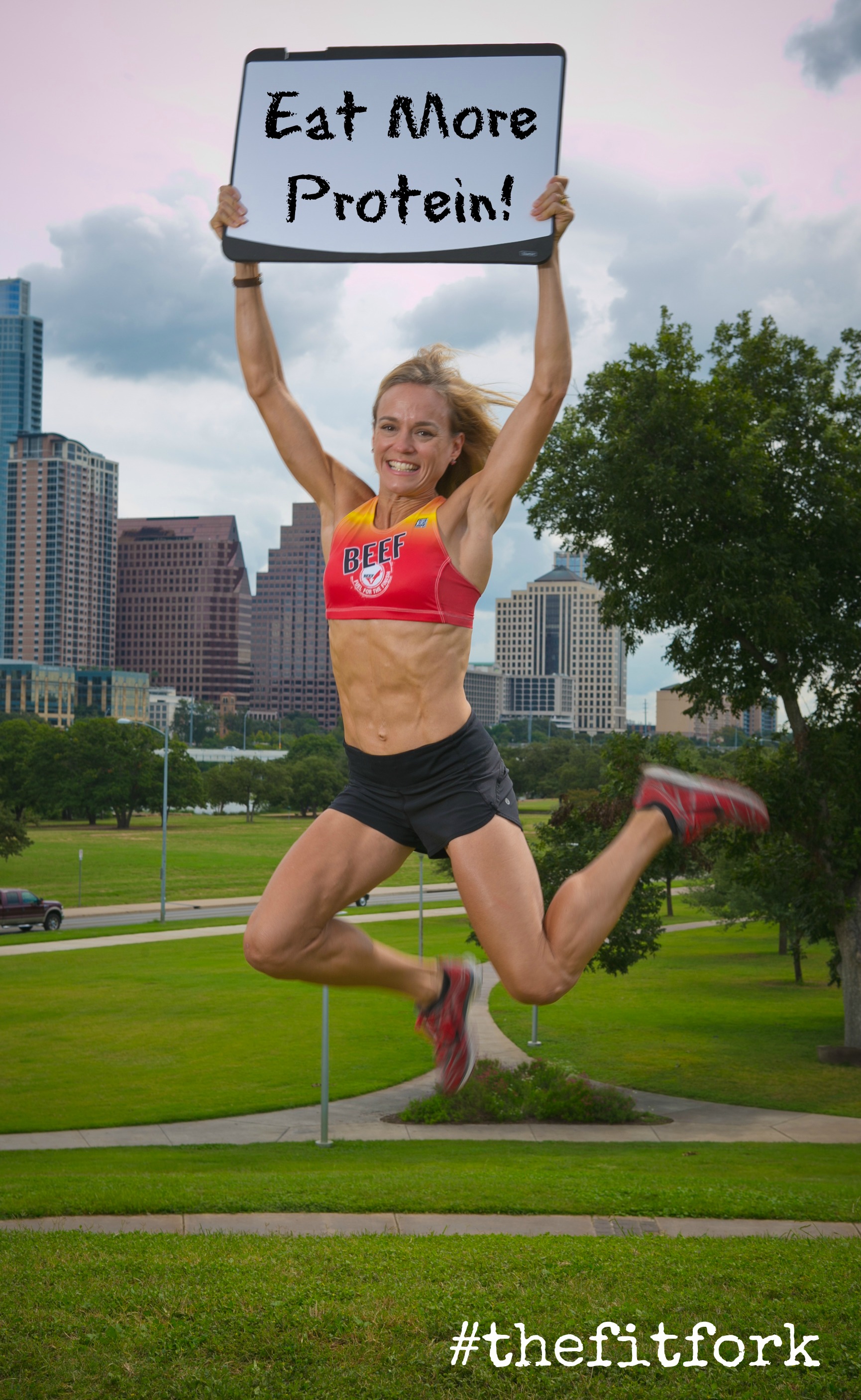
Protein is a power food for runners and athletes.  It plays a vital role in muscle building and recovery that can make a huge difference in the way you perform, feel, and even look. Packed with vital nutrients, protein repairs muscle damage after a workout and also tops off your glycogen stores when you combine it with carbohydrates – this lessens your chance of “bonking” in a race. Protein has also been linked with reducing the effects of the “stress” hormone cortisol on your body, which means you may even feel more relaxed. And, studies have also shown that a higher-protein diet from lean sources, especially when consumed at breakfast, experience a longer-lasting satiety level that curbs later-day snacking and thus helps to maintain, or even reduce, weight.

If you are curious about how much protein to eat, when to eat it and what types of protein are best, check out my guest post on Zooma Women’s Race Series today. It’s all about the benefits of protein and includes a delicious recipe for Sirloin with Sugar Snap Pea & Pasta Salad.  What a great make-ahead meal to enjoy after your long training runs in preparation for the upcoming  Zooma Florida (1/19/13) or Zooma Texas (3/23/13)

Breaking news, 10-percent off code for those of you who want to Run Zooma Texas on March 23, 2012 — it’s good for both the 5k and the half marathon.  Just click here to register and enter TXAMB3 in the promotion code box.

Shoe Lacing Techniques for Runners – Happy Feet for Miles and Miles

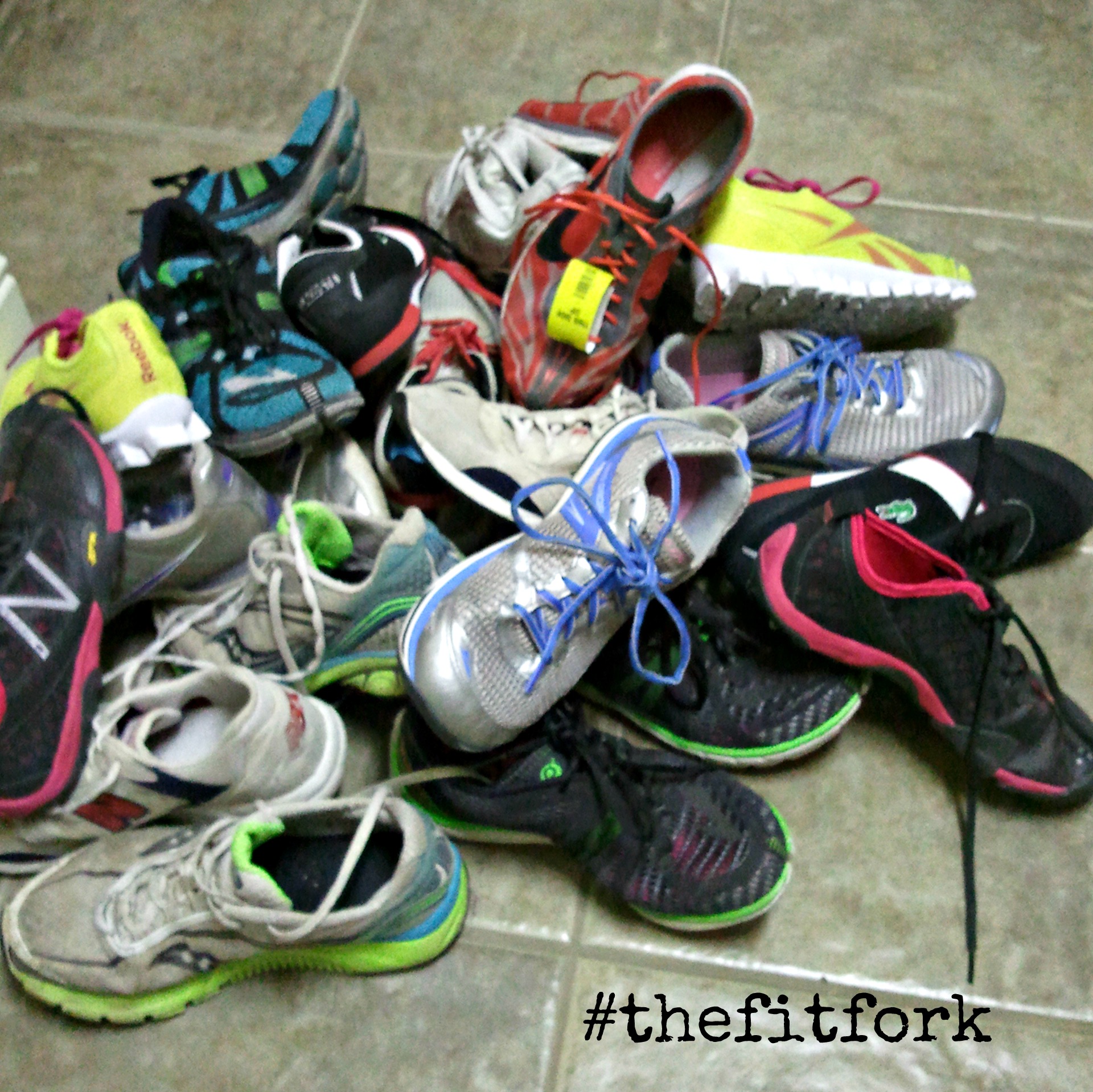
Yes, this is my pile of running shoes for the last year. As you can see, I’m not particularly brand loyal but I have been regrettably faithful in one thing, wearing my shoes laced up exactly the way they came out of the box. I was wondering why my feet hurt a bit. Not hurt so much biomechanically, but hurt more in the little aches and pains way of being rubbed wrong. We all know that over time, this sort of irritation has beastly byproducts – namely callouses, blisters and toenail troubles.  Of course, before you try any of these lacing techniques below, you need to get a proper evaluation of your foot and the right shoe suggestion from a decent running store that knows of what they speak. But, even geared up with a shoe that meets the needs of your foot shape and running style, there can still be nagging issues. Who knew feet could be so happy with just some simple re-lacing solutions?

“Stop Heel Slip” Lacing Solution

I get heel slip frequently, usually because I decide against better judgment that I just absolutely have to put myself in a men’s shoe because it looks cooler than the women’s model. Or, sometimes that women’s shoe is actually running large in the heel counter. Also, the size of my feet are slightly mismatched (a common problem), making the smaller one more prone to slippage.

You can stop heel slip by creating a more secure fit around the ankle without tightening the entire shoe. What you do is lace shoes in a traditional crisscross fashion up until the last eyelet on each side. Then, draw the shoelace straight up and down through the last eyelet, in the process creating a loop the diameter of your pinky finger. Do the same thing on other side. Cross lace ends over the top of shoe and thread each through the opposite loop. Finally cinch to the appropriate tension, tie and run! The loops allow the tightening to stay around the ankle without affecting the tightness up the entire length of the tongue.

“Keep Big Toenail from Turning Black” Lacing Solution

Some might think losing your big toenail is a rite of passage for a marathoner or other endurance athlete. Not only is the problem unsightly; in my experience, the toenail grows back in all malformed and funky. At least I’m a girl and can keep my toenails polished! This problem is caused by running downhill, feet swelling during a long run and also by a mismatched foot size that won’t allow you to get a balanced fit on running shoes unless you’re willing to buy two pairs. I’ve seen plenty of marathon martyrs with blood seeping through the toe box area and I’ve also seen creative folks who have just gone ahead and cut out a little peep hole for their big to stick through!

Thank goodness, proper lacing can lift the shoe upper off your distressed digit and help prevent all of this awfulness. To get relief, thread one end of your shoelace through the eyelet next to your hurting big toe. Pull the end of that lace up to the last eyelet on the opposite side, bringing the lace through to the outside and leaving enough slack to tie off a bow eventually. It looks weird but don’t worry. Take the rest of the lace straight across toward the outside of the shoe and then diagonally up toward the inside of the shoe. Repeat until all of the eyelets are laced. Now when you pull on the outside lace, it lifts the material above your big toe up and off your nail.

“Stop Top-of-Foot Claustrophobia” Lacing Solution

Runners with high arches (like moi) often complain that the top of their foot feels too cramped inside the shoe. In fact, after wearing my shoes for more than an hour of running or anytime just out-and- about, I start to get that terrible feeling of claustrophobia and that I need to rip off my shoes immediately. Sometimes, I feel like my feet are even going numb. However, I was so excited to find out that I can improve both my physical foot and mental states by using parallel lacing.

This technique secures the foot without putting pressure on the top and even looks quite tidy. Start by lacing the first two eyelets on the big-toe side of the tongue (not the first eyelet on either side of the tongue like you normally would). Pull shoelace from first eyelet straight across to the first eyelet on the other side and push it down through eyelet. Now, pull lace straight up the side, skipping over one eyelet, and thread it through the third eyelet. Pull it directly across the tongue again, and push it through the third eyelet on the opposite side. Repeat until all eyelets are laced and tie off in a bow.

What Goes Up Must Come Down, What Goes In Must Come Out

Also known as “The Trails and Entrails of the 2012 Hood to Coast Relay”

Some of you may have heard that I just got back from running the famous Hood to Coast Relay on a team sponsored by Nuun Hydration. Whoo-hoo!  It was truly the realization of a 16-year dream to take part in this almost 200 mile journey from the snow-capped Mount Hood all the way down to the sandy (and quite chilly) beach of Seaside, Oregon.  And, to represent for an awesome company whose product I firmly believe in and actually do drink made the experience all the more exceptional, as did hanging out with the 35 other like-minded runner-blogger-foodie-fashionistas. Holla!
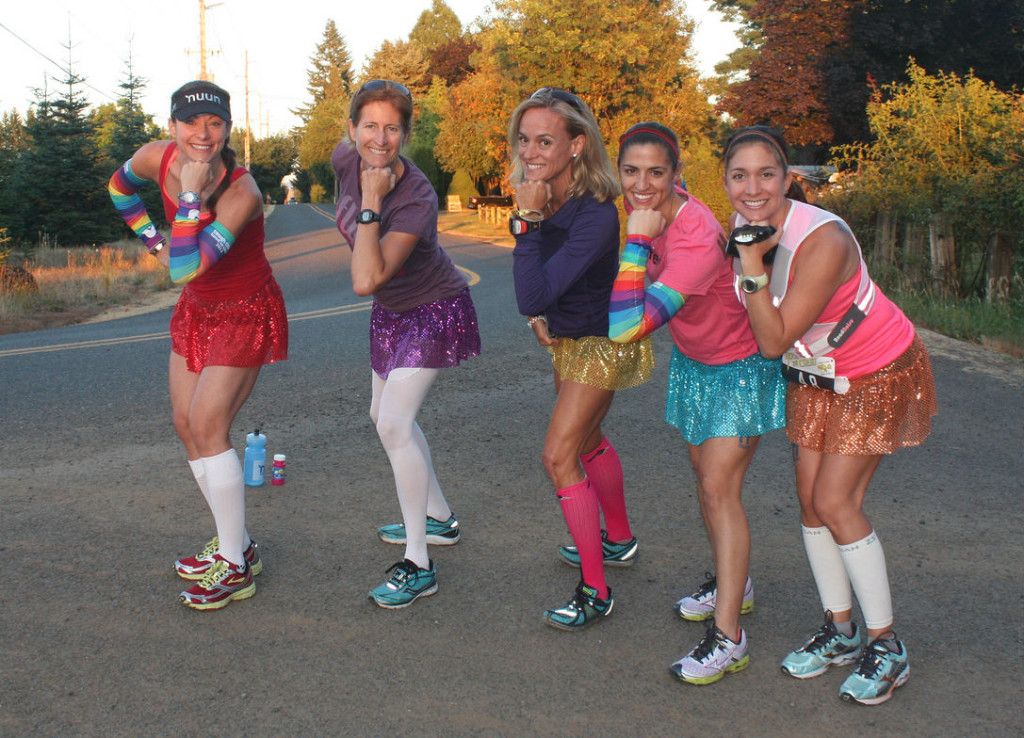
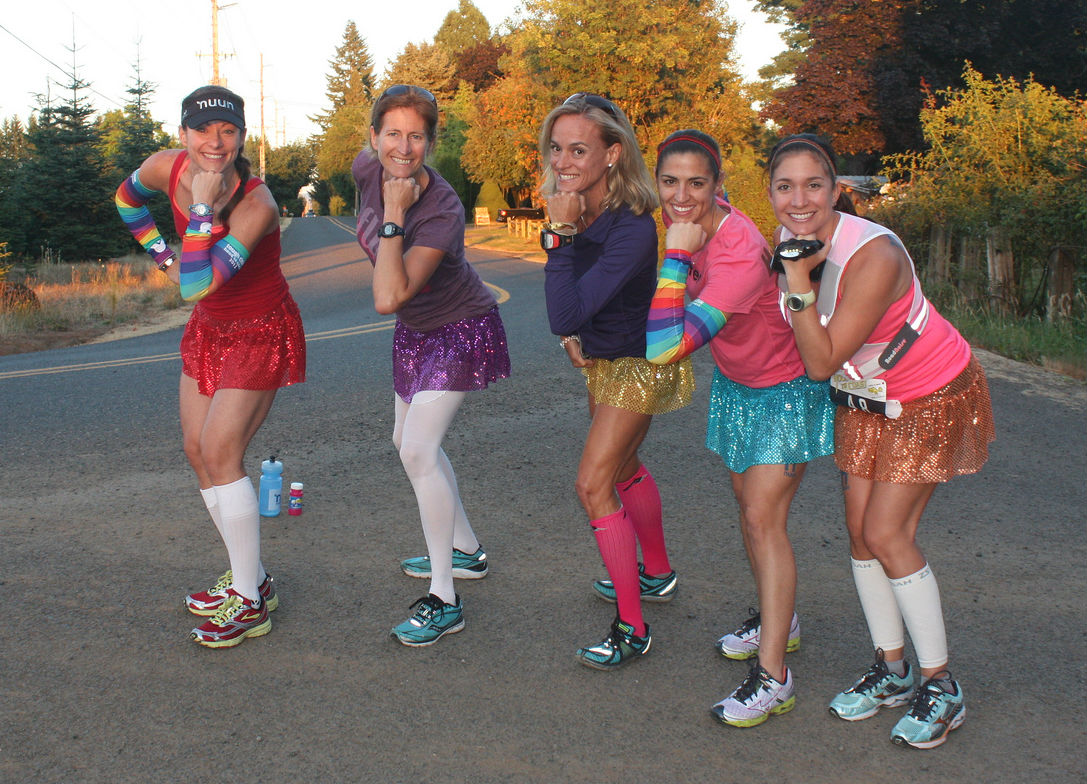
Amanda, Marjorie, Jennifer, Katie, Elizabeth . . . and Erin is running!

I’m not a very savvy race recapper; I’ve forgotten my race leg times, my mind and my photos are fuzzy, and I’m just staring at the big bag of swag donated by generous sponsors (thank you) that I will eventually need to dig through and provide thoughtful reviews. However, I do clearly recall important details about the trip such as the food and drink. It’s all perspective and priorities, people – and this is The Fit Fork after all!

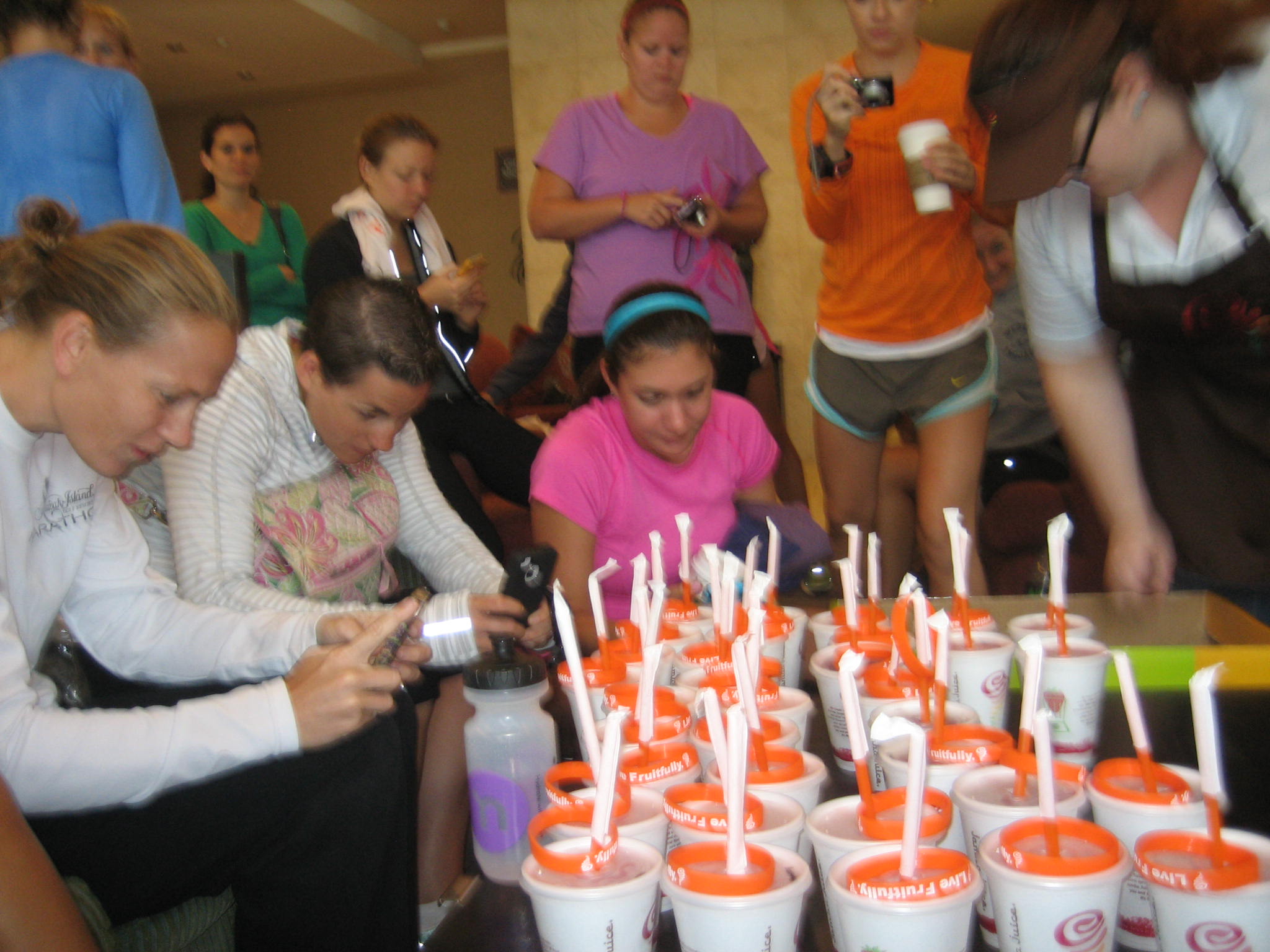
When I finally rolled into Seattle (Nuun HQ), the pre-running party had been going on for at least a day. Since I missed out on the female bonding at the Seattle Mariners game, the morning run-swim and the insider tour of Oiselle, I hoped that my attempt to sweeten up these girls with Jamba Juice smoothies would bear some fruit. Thanks to the yummy, slushy goodness of flavors like Razzamatazz™, Strawberry Whirl™ and Aloha Pineapple®, I felt as welcomed as the new girl at school whose mom sent in cupcakes to mark the occasion — only healthier!
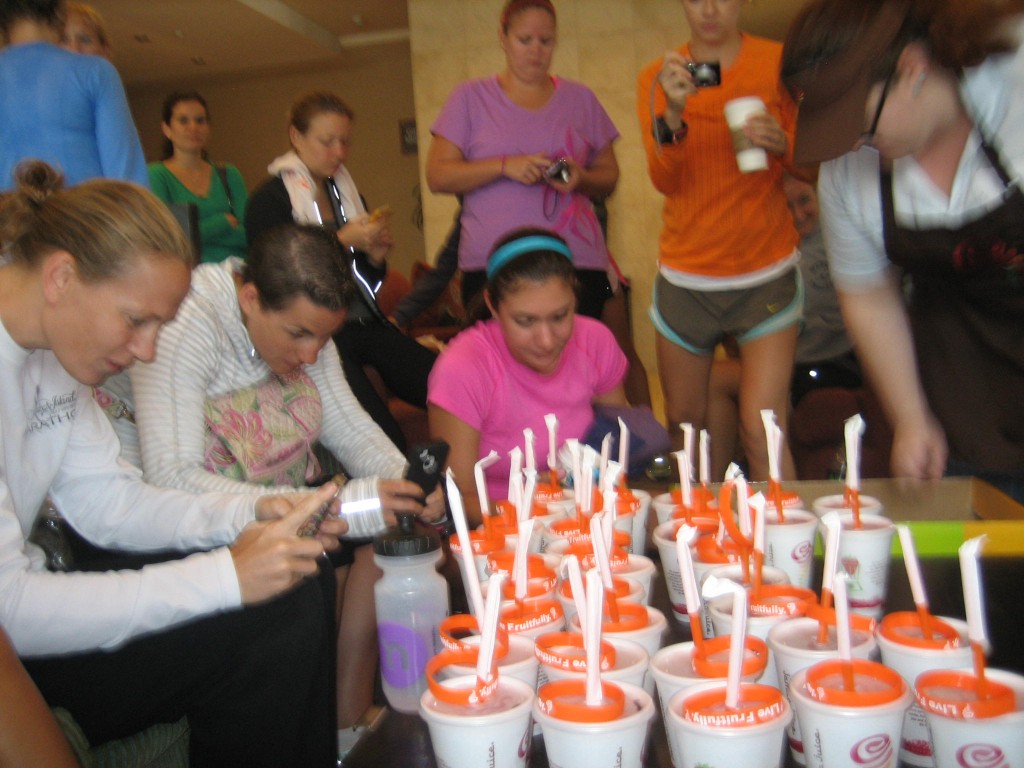
What Blogger-Runners Do - Tweet About Everything!

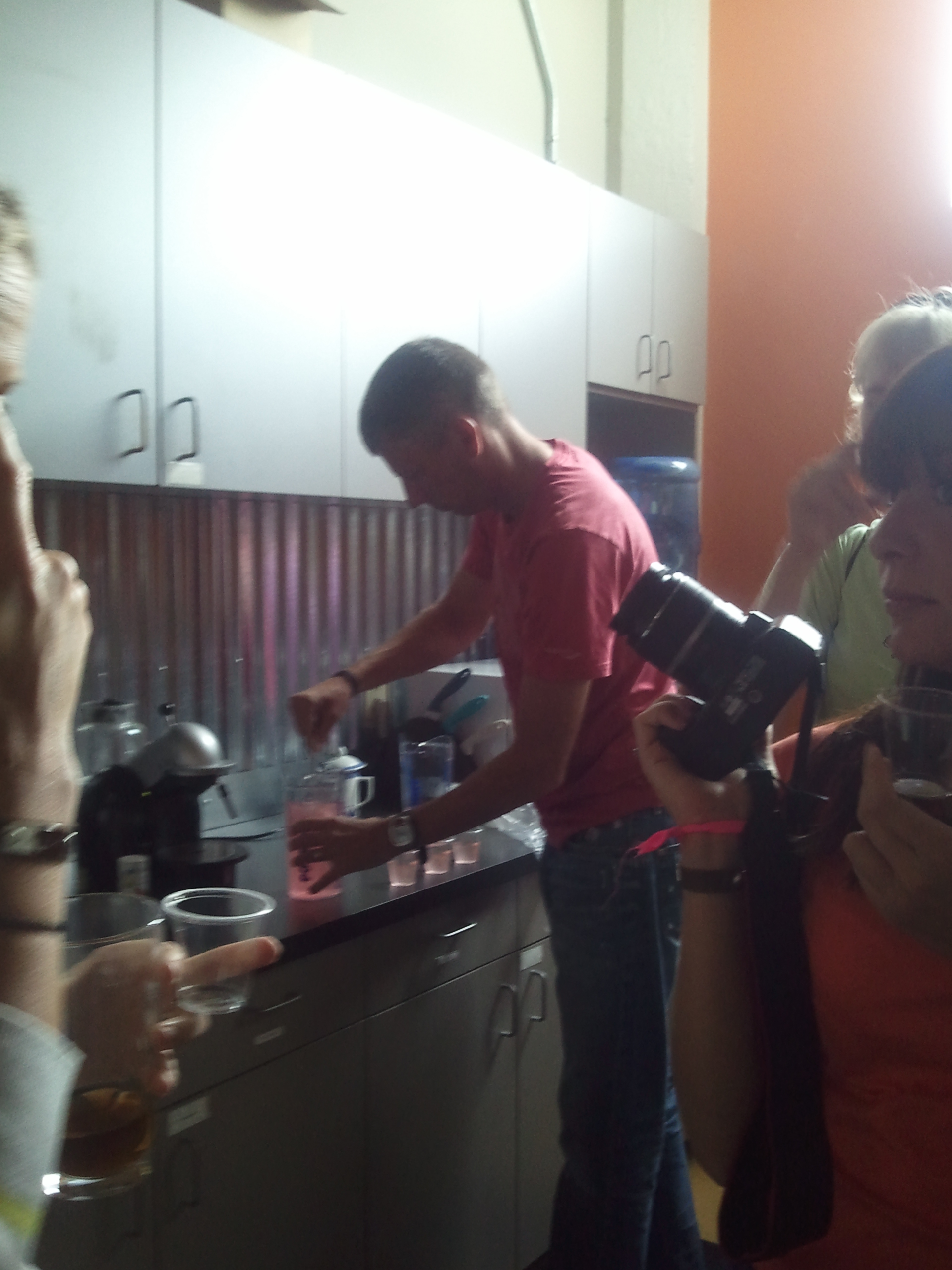
Soon, we’d meet up at Nuun HQ for a variety of activities including a taste-testing of not-yet-for-sale secret flavors whipped up by the company president, Mason Reay.
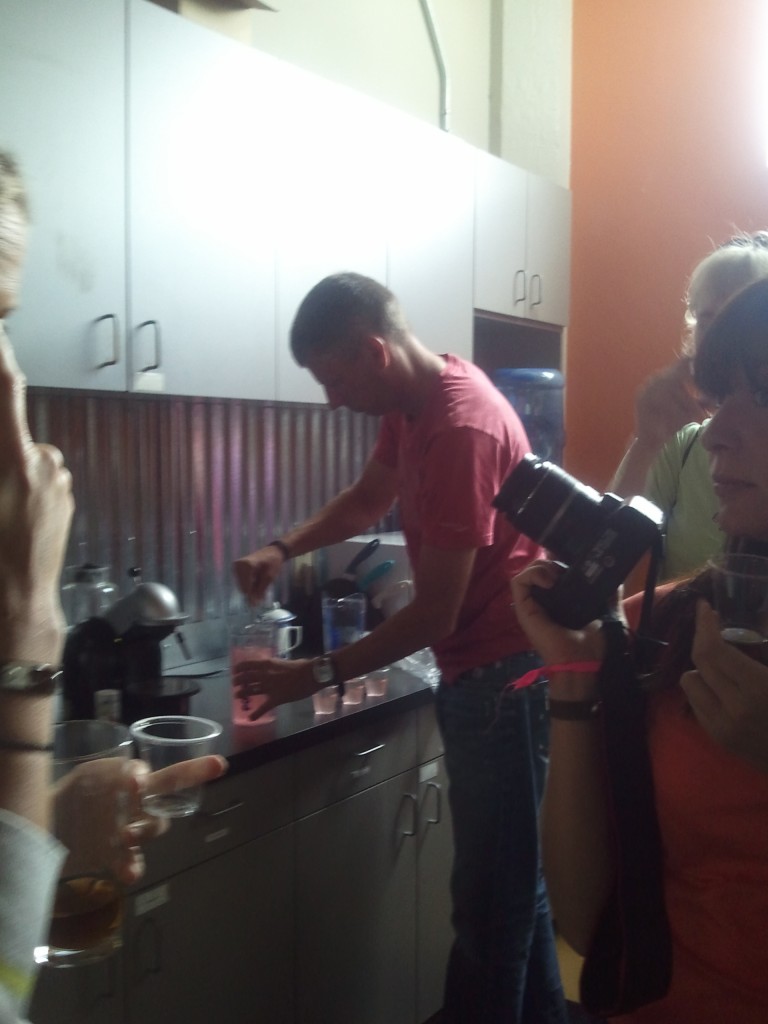
Nuun Hydration Tablet - Top Secret Flavors Coming to you Soon!

The frenzied scavenger hunt across the city of Seattle sent me into a few moments of tourist distress. Alas, we only had time to stop, snap pictures and tweet our location at a number of foodie locations including Pike’s Market, a famous Donut Shop, the Original Starbuck’s Coffee.  I’m definitely will need to revisit these places at my leisure on a future trip!

The pre-race dinner, catered by Bucco de Beppo, was a smorgasbord of healthy Italian dishes to suit the rainbow of food restrictions in the group. I am not at all being snarky here when I point out that Team Afternuun Delight covered quite a slice of the nutritional spectrum from dairy-free, soy-free and gluten-free to plant-based and low-carb. Kosher? Raw only? If I missed some, post in the comments. I always like to hear about a new diet lifestyle. I felt tempted to throw in my personal preference which is the Paleo Diet (fish, grass-fed pasture raised meats, vegetables, fruit, fungi, roots, and nuts, with the exclusion of grains, legumes, refined sugar, and processed oils). But, then I remembered I follow the “100-percent Paleo, 80-percent of the time” mindset; meaning vacations, even a running vacation, almost always fall under the other 20-percent of the time. This would be my mistake.

Race day we were up at the crack of dawn, but didn’t have to take off until later in the morning. This meant a quick trip to Specialtys Bakery near the ballpark where the-nicest-ever-employee Colin hooked me up with a Southwestern Egg Sandwich on bread. Yes, bread!  After loading into our respective vans (six ladies to each and some darn nice ones riding with me), we headed out of town and only made it as far as the Panera Bread in Tacoma. Here the whole gang noshed on our favorite menu items (me, Barbeque Chicken Salad) while local lunchers looked on with a combination of bewilderment and, I’m just guessing, awe and admiration at our sparkly skirts and rainbow striped arm-warmers.

Most of our remaining day and a half would be spent inside the 12-passenger van, except when it was time to run our respective legs, visit one of the 529 port-a-lets (they called ‘em “Honey Buckets” and I came to know ‘em well), or hang out for some down time at an exchange. This meant we relied on rations piled up in the back of the van except when our intrepid and highly entertaining driver Tyler, a Nuun employee, would pull over to grab us a snack.
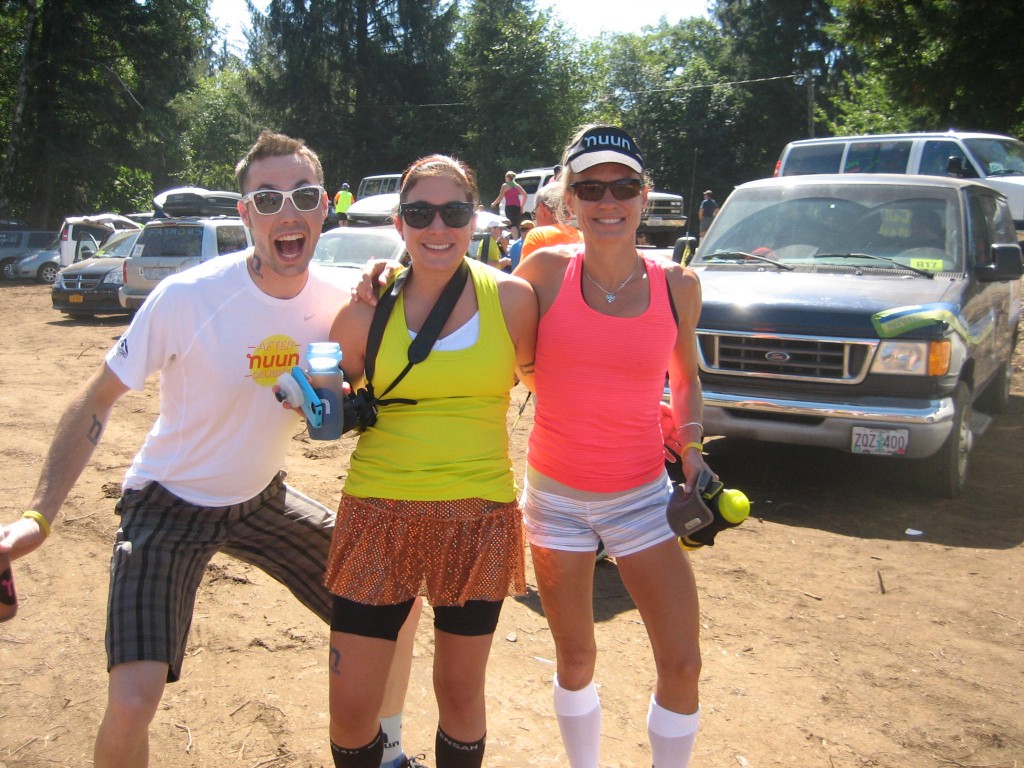
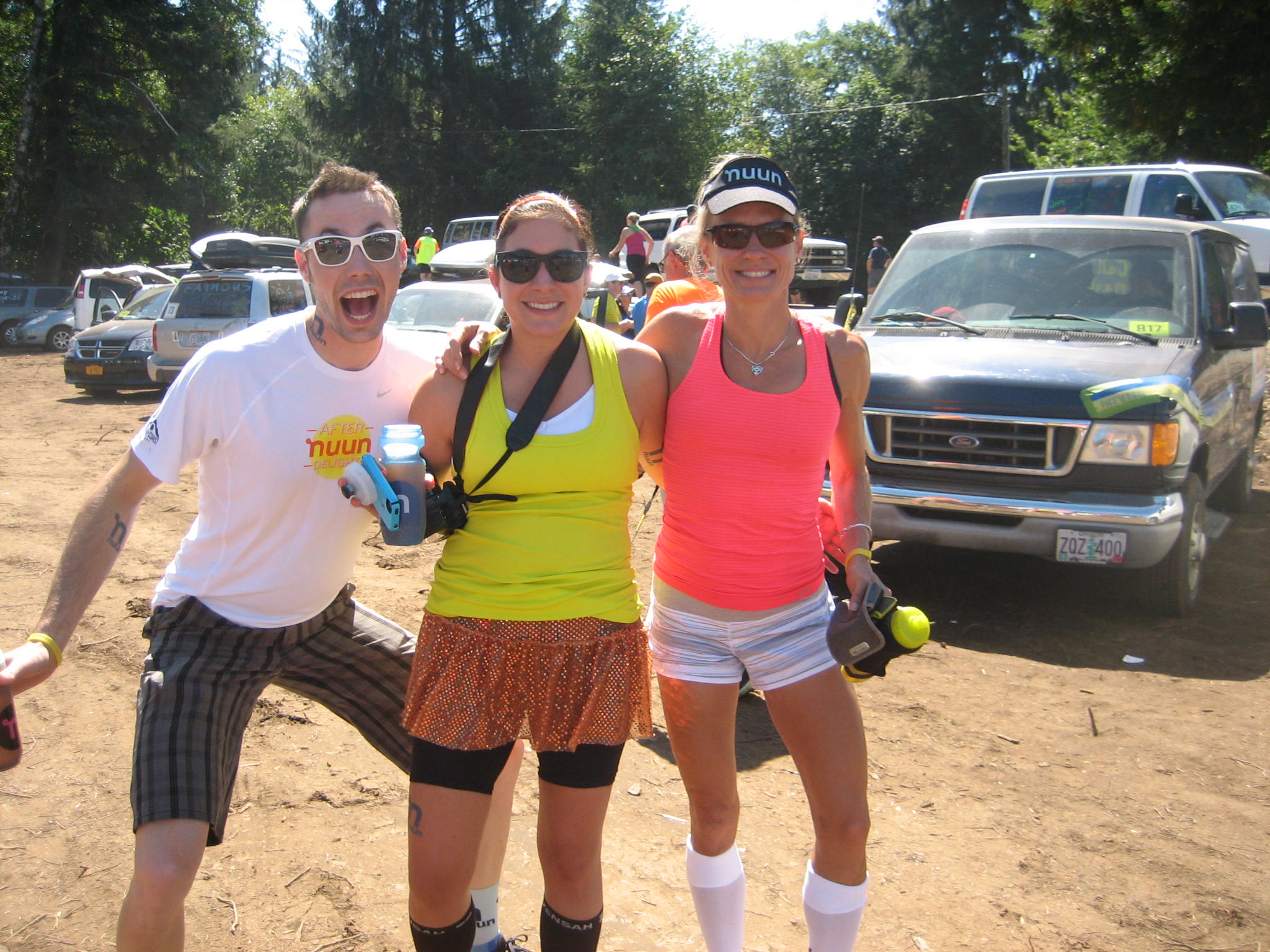
Tyler, Elizabeth and Jennifer cutting loose at a exchange point.

Rations consumed in the van:

  • Nuun Hydration tablets (favorite flavors were Kona Kola and Strawberry Lemonade)
  • 12 Chiboni Yogurts  (the official yogurt of the USA Olympic Team and Team Afternuun Delight)
  • Lots of Kind Snacks – Granola and Bars
  • 14 bananas
  • 8 bagels
  • Peanut butter
  • Homemade brownies (I never got one!)
  • GNC caffeine chewies
  • Saltines
  • Graham Crackers
  • Trail Mix
  • Gummy Bears
  • String Cheese
  • Assorted beers
  • Muscle Milk
  • Assorted energy drinks (consumed by driver and, err, me)
  • Coffee
  • Random ham sandwich and hamburger stops

You know you’re committed to eating right when you bring food along with you on a trip. Wish I had that much stick-to-it-iveness; maybe I wouldn’t have had so many stomach issues. The crazy lady (love ya) in the back seat delighted us with an endless array of healthy options on the go, some actually good!  Kale chips, sprouted raw pumpkin seeds, tuna fish in a can (she courteously went outside to eat that), beans, rice milk, berries, kombucha and more.

After we finished our first round of legs, we had arrived in Portland. Since it was after midnight, we parked the van and walked over to the closest place open and serving food, the Bunk Bar. At this time of night, you can’t be picky. Another Egg Sandwich for me (top bun off but loaded down with bacon ) and split a local brew on tap with a teammate. Was hoping that beer would help me go to sleep during our 2 hour layover in the parking lot. But, alas, it was the indigestion and adrenaline that so wanted me to stay awake.
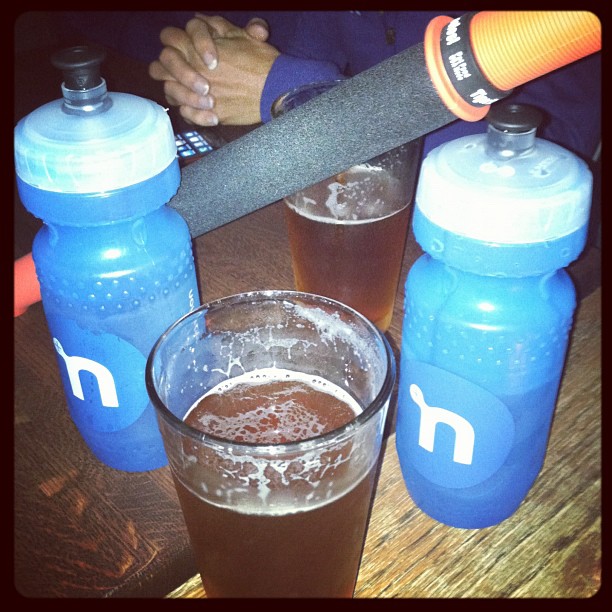
Hydrating at bunk bark with beer and Nuun.

My second leg at 8am was fueled in quality style with a Monster Absolute Zero followed by a banana and yogurt for recovery. The remainder of down time until my third leg at 5pm included no sleep, a long traffic jam through the countryside of Oregon, overindulging in trail mix until I couldn’t even look at the bag anymore, and a stomach ache that refused to be resolved.  Several days of magnesium, caffeine and fiber supplementation were failing me, there seemed to be no solution to my hormonal-travel-naughty-eating induced problem.  The whole van was pitching in to help, amazing how close you can become with people when “living” in such close quarters.  Rumors from another team van were flying; apparently the Aspaeris Pivot Compression Shorts, a gift in our goodie bag, were literally squeezing the #@$& out of some of the girls. It was worth a try, but I was foiled from the get go. My pair was missing.

Apparently, all types of digestive problems are common during the 28+hour relay, as evidenced by the van for the team Great Bowels of Fire. 
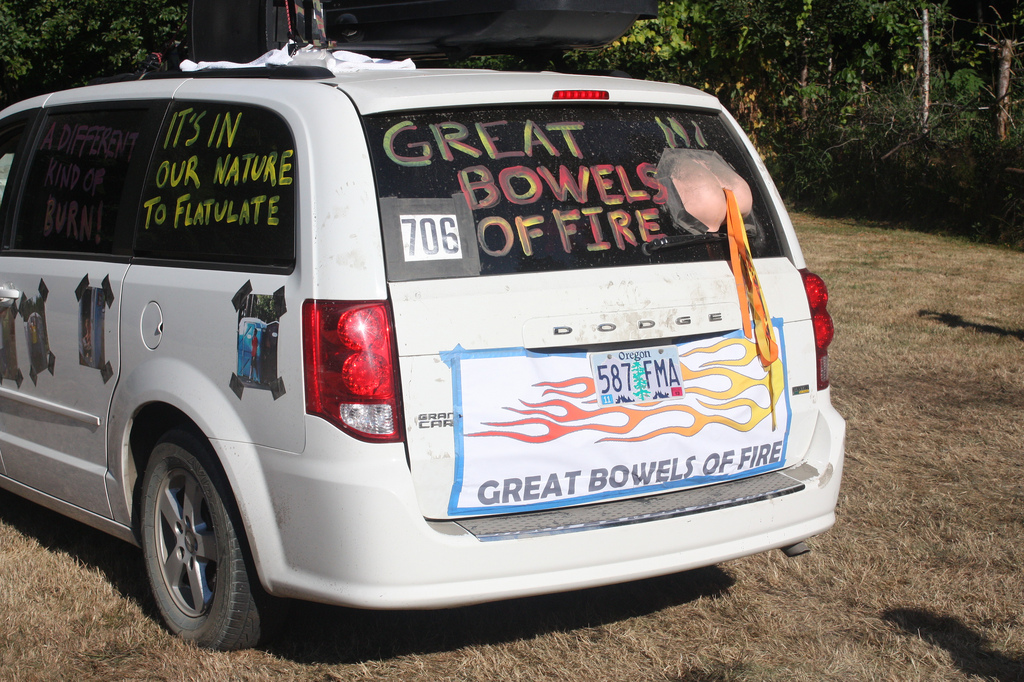
Third leg was run around 5pm after a late afternoon filled with heartbreaking drama including a nasty, sprained ankle by a sweet teammate and picking up lost runners who had run miles out of their way out on the course. It was really touching, and a great lesson for me, to see everyone rallying together to emotionally boost up the injured and upset. It wasn’t about winning the race or how fast or cool a single person was; it was about finishing together regardless of the circumstances.  And we did!

To celebrate, we partied down at the beach as guests of Nike. Local hefeweizen, pulled pork, smoked turkey, salad and such.  It was good, it was all good.
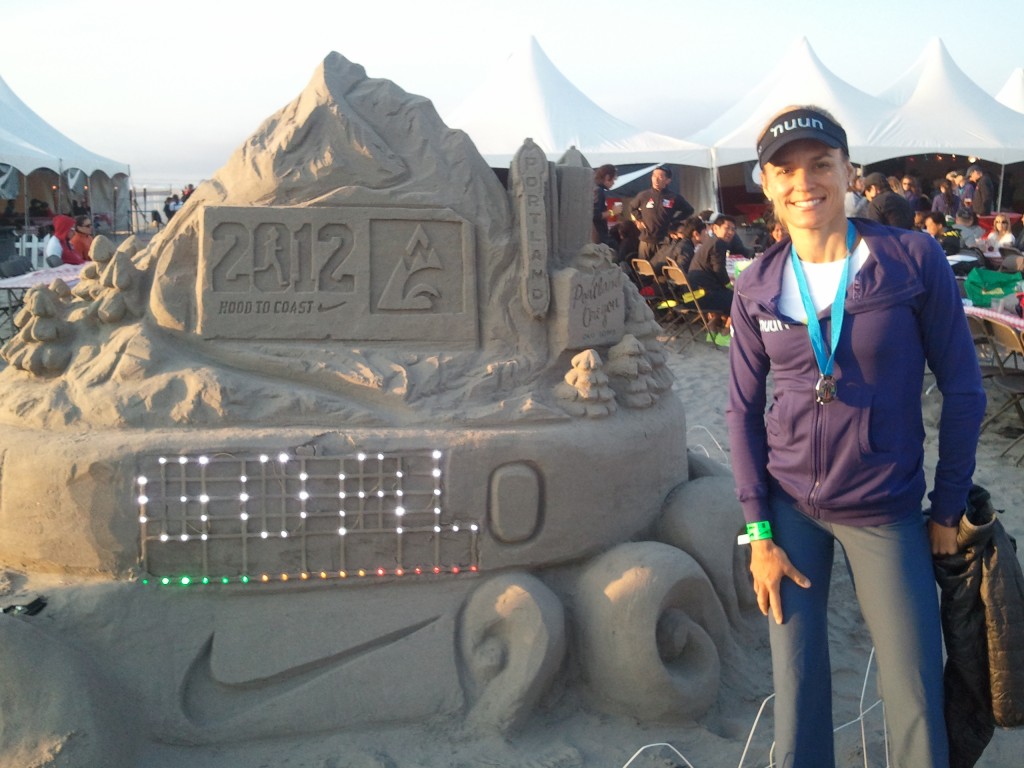
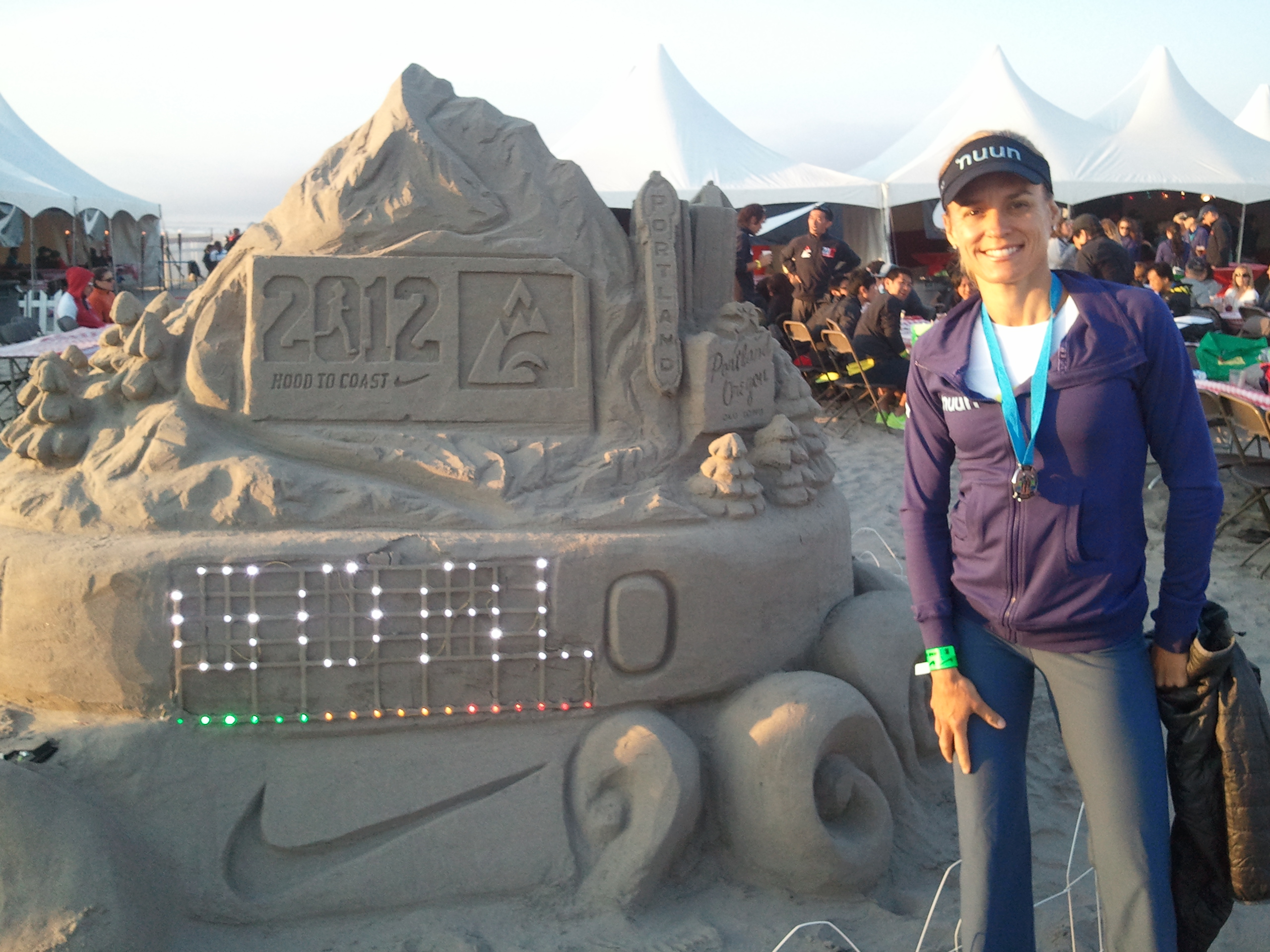
Entrance to the 2012 Hood to Coast Relay Nike Party

After a midnight van ride and another sleepless night in Seattle, I started working my way back to Austin. A Kind Bar and Starbuck’s Chai Latte held me for breakfast and a spinach salad with feta and craisins was a not-too-bad airport layover lunch. And, when I got home at 7pm, everyone was waiting for dinner! Hurray! Fajitas on the fly.  Oh yeah, and I unpacked. Everything. All problems solved.

Thank you Nuun Hydration for such a wonderful experience and all the support from your employees. It was both harder and easier than I thought, does that make any sense?  Loved it!