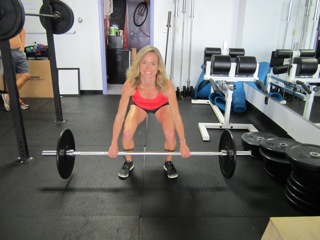
 The first time I saw this exercise, I was pretty sure it wouldn’t be for me. I mean some massive 250+ pound guy was lifting a bar with an insanely large amount of weight on it as his eyeballs bulged out and he made Neanderthal-like grunting noises. Really, how could this help me keep my status as lean-mean running machine and bona fide girly-girl?
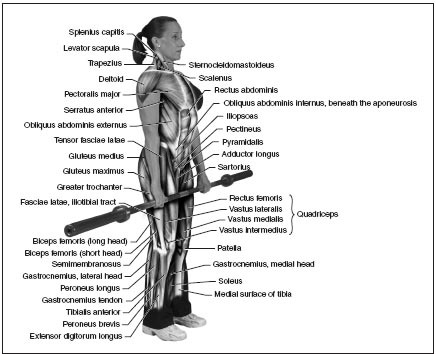
But, but then my friend Valerie Hunt, a personal training guru and POSE running coach at Fit and Fearless CrossFit, reminded me how I’m always whining and complaining about tired legs that couldn’t power up a hill during races and a sore back and midsection after long training runs. She encouraged me to give the deadlift another look, reminding me that – if performed correctly – the deadlift is really a whole-body exercise that engages the quads, glutes, lower back along with the abs, traps and upper back. Check out this diagram that shows all the muscles involved – amazing!
I’m not planning on transforming into a weight-lifting record-setter by any means; I just want to reap the benefits of explosive power and overall strength this functional move can bring to my running – and everything else! Using a modest amount of weight, about 75% of my body weight, I’ve been doing five sets of five lifts once per week (which is perfect for beginners) and am looking forward to seeing the results of this functional exercise in a 10K race next weekend.
For more information and an example of safe and proper technique, please check out The Deadlift by Greg Glassman published in The CrossFit Journal.