

What Is the Glycemic Index and Why Should You Care?
Practical kitchen hacks that make healthy eating easier—and smarter. If you love bread but worry about how the carbs (source of glucose) affects your blood sugar, here’s a surprising and simple tip: freeze it—and then toast it. Not only does this extend your bread’s shelf life, but it may also reduce its glycemic index (GI), offering benefits for energy, appetite, and long-term health. (first study)
The glycemic index ranks carbohydrates based on how quickly they raise blood sugar after eating. Foods with a high GI (like white bread) cause a quick spike, followed by a crash—leaving you hungry and low on energy. Foods with a lower GI cause a slower, steadier release of glucose, which supports stable energy, better focus, and fewer cravings.
Freezing Bread Lowers the Glycemic Index
Yes, really! Studies have shown that freezing bread, then toasting or reheating it, changes the structure of the starches. Here’s how it works:
- Freezing transforms some of the digestible starches into “resistant starch*,” which resists digestion in the small intestine.
- This slows the absorption of sugar into the bloodstream, reducing the glycemic impact.
- Toasting after freezing enhances this effect even more.
For example, white bread that’s been frozen and toasted may have a GI that’s 30–40% lower than its fresh counterpart! The research I’ve read says about 30% reductions in glycemic load after freezing and then an ADDITIONAL 10-15% if toasted.
*Resistant starches not only lessen glycemic load, they promote good gut bacteria and also help you feel full longer.
How to Do Freeze Bread for the Best Result
- Slice first: If you bought fresh bakery bread, slice it before freezing so you can pull out one piece at a time.
- Store it airtight: Use a freezer-safe bag and remove as much air as possible to prevent freezer burn.
- Toast from frozen: No need to thaw—just pop it straight into the toaster or toaster oven.

Other Benefits of Freezing Bread
- Reduces food waste: Bread stays fresh for up to 3 months in the freezer.
- Saves time: Batch prep sandwiches or breakfast toast ahead of time.
- Prevents overeating: It’s easier to practice portion control when you defrost just what you need.
- Keeps variety on hand: Stock different types (whole grain, sourdough, sprouted, etc.) without worrying about spoilage.
Pro Tip: Choose the Right Bread
While freezing and toasting helps with any type of bread, start with the best foundation. Look for breads that are whole grain or sprouted grain, high in fiber lower in added sugars, free from artificial preservatives or fillers. Bonus points for breads made with seeds, nuts, or legumes—they offer additional nutrients and even more fiber. This is my personal favorite bread HERE — but you do you!
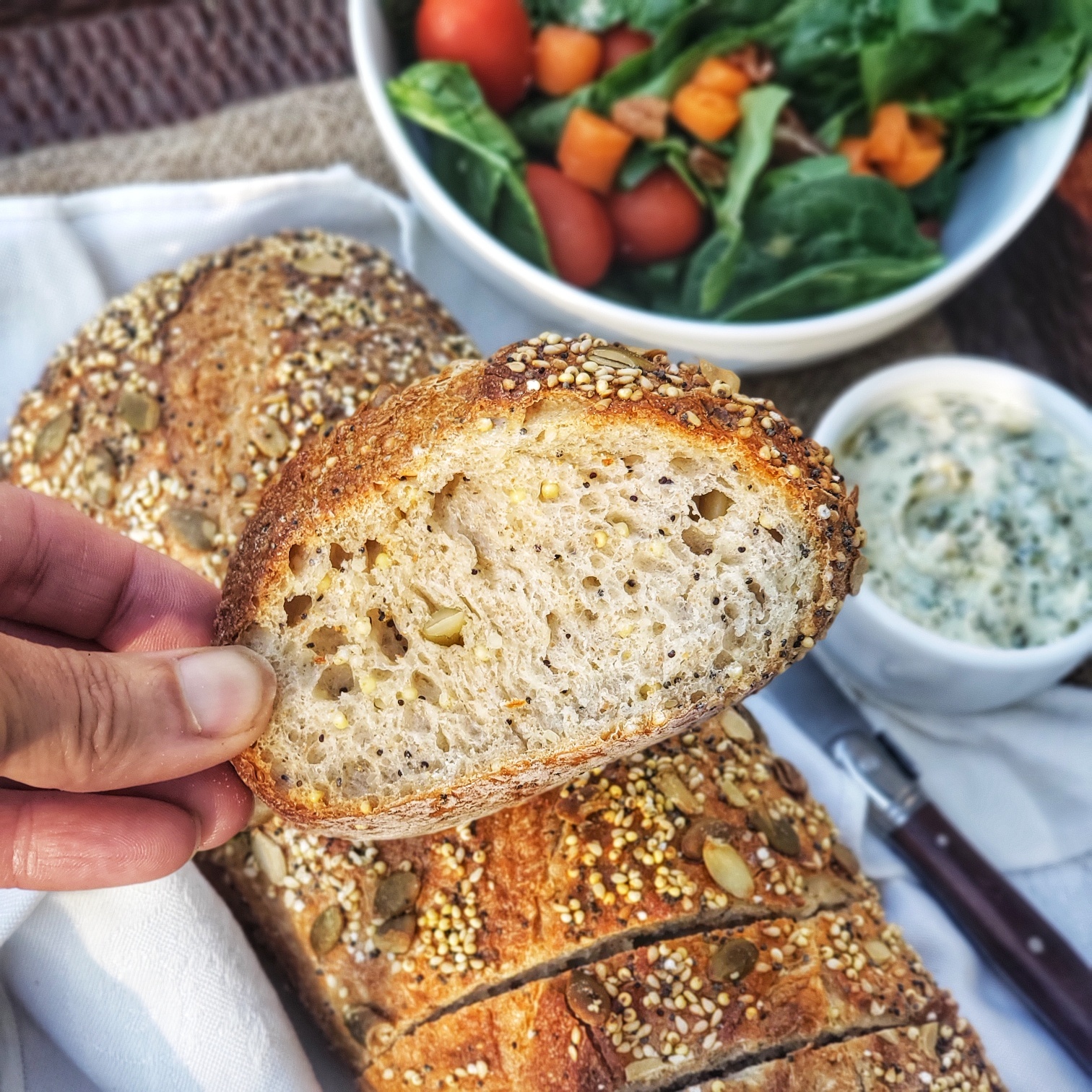
Favorite Ways to Eat Frozen-Then-Toasted Bread
- Smashed avocado with a poached egg
- Nut butter and banana slices
- Cottage cheese, berries, and a sprinkle of cinnamon
- Turkey and spinach for a protein-packed snack
