Easy Potato Hack To Lower Glycemic Index (Cook, Chill, Reheat Method for Guilt-Free Carbs)

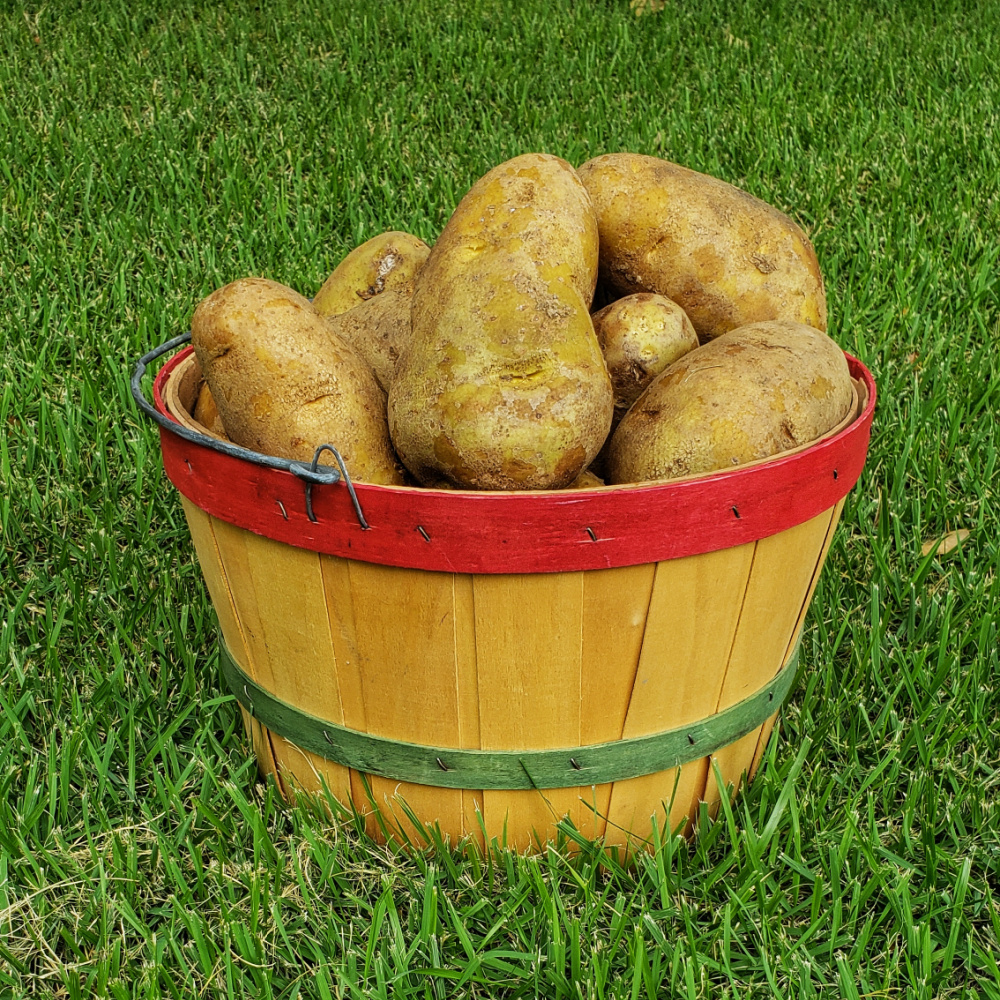
russet potatoes aka idaho potatos

Potatoes sometimes get unfairly dragged into the “bad carb” conversation, but for active people, athletes, and anyone who trains regularly, they can actually be one of the best whole-food fuel sources around. They’re affordable, versatile, naturally gluten-free, and packed with nutrients that support performance and recovery. Even better, there’s a simple kitchen trick that can make potatoes more blood-sugar friendly and more filling without sacrificing flavor.

The Simple Potato Trick

To lower the glycemic impact of potatoes and increase satiety, try this easy three-step process:

  1. Cook the potatoes (boil, bake, roast, steam — any method works)
  2. Chill them in the refrigerator for 12–24 hours
  3. Reheat and enjoy

When cooked potatoes cool, some of their starch changes into something called resistant starch. Resistant starch behaves more like dietary fiber in the body. It isn’t digested as quickly in the small intestine, which means:

  • Slower glucose release
  • Less dramatic blood sugar spikes
  • Longer-lasting fullness

Research suggests that this cooling process can reduce the glycemic impact of potatoes by roughly 25–40%. Translation: better sustained energy and fewer spikes and crashes.

Even better — reheating the potatoes doesn’t destroy the resistant starch, so you can still enjoy them warm in many of your favorite dishes.

Why Potatoes Are Great Fuel for an Active Lifestyle

Potatoes are a healthy source of energy-providing carbs for the athlete.

For athletes, runners, and anyone who trains regularly, potatoes check a lot of nutritional boxes.

1. High-quality carbohydrates for energy
Carbohydrates are your body’s preferred fuel for exercise, especially endurance training and high-intensity workouts. Potatoes provide easily accessible carbs that help replenish glycogen stores after training.

2. Potassium powerhouse
One potato contains more potassium than a banana, ounce for ounce. Potassium plays a key role in muscle contraction, hydration, and nerve function, all essential for active people.

3. Naturally fat-free and whole-food based
Potatoes are a simple, minimally processed carbohydrate source that pairs well with protein and healthy fats to create balanced meals.

4. Surprisingly filling
Potatoes rank very high on the satiety index, meaning they help keep you satisfied longer compared to many other carb sources. The resistant starch trick can boost that effect even more.

This Potato Hack Works with Variety

The cooling method works with all varieties of potatoes. So whether you’re meal prepping roasted potatoes, boiling them for potato salad, or baking a batch for the week, the cook → chill → reheat method still works.

  • Russet
  • Yukon Gold
  • Red potatoes
  • Baby potatoes
  • Purple potatoes
  • Sweet potatoes (which also contain resistant starch when cooled)

How to Use Chilled Potatoes in Everyday Cooking

Once your potatoes have been chilled for 12–24 hours, you can use them in almost any recipe that calls for a softer cooked potato. Here are a few easy ideas:

Mashed potatoes
Bake or boil potatoes, chill overnight, then reheat and mash with your favorite add-ins.

Baked potatoes
Bake ahead, refrigerate, then reheat the next day for a quick meal prep side.

Roasted potatoes
Cook and chill whole potatoes, then cube and roast the next day for crispy edges.

Soups and stews
This is one of my favorite tricks. I often make my entire pot of soup with the potatoes boiled in, then chill overnight before eating. It still delivers the resistant starch benefits even though cooked alongside the other ingredients.

Notes About Raw Potato Storage
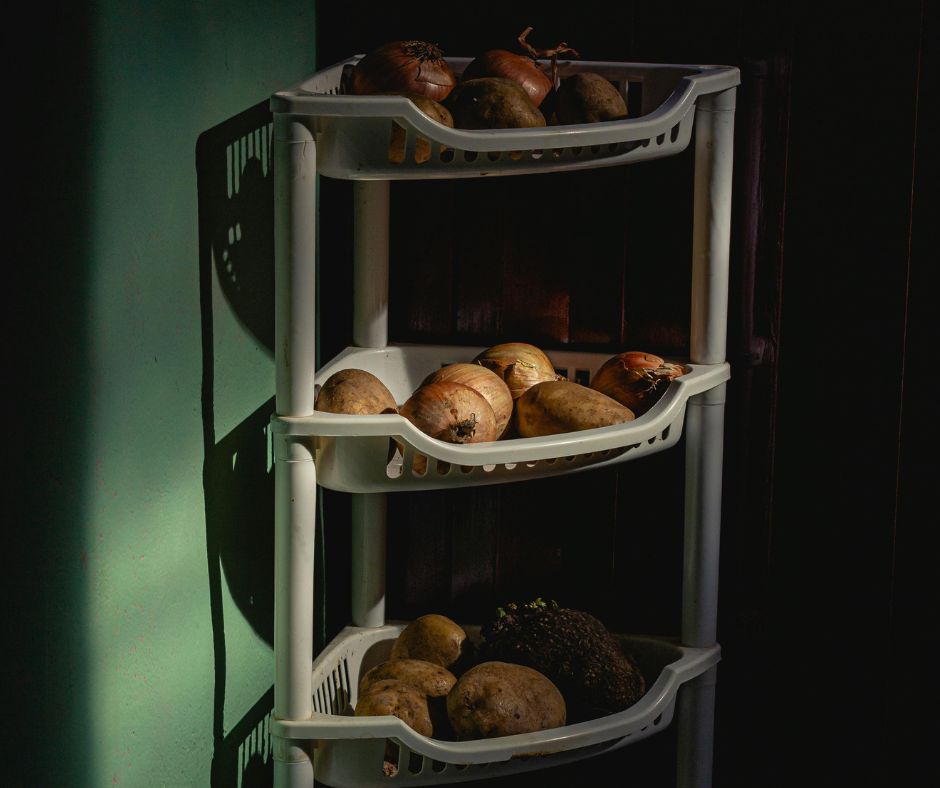
One important tip: don’t refrigerate raw potatoes before cooking them. The FDA and potato industry guidelines recommend storing raw potatoes in a cool, dark, well-ventilated place rather than the refrigerator.

The reasoning for not chilling raw potatoes is that when they are stored in cold temperatures, some of their starch converts to sugar. When those potatoes are later cooked at high temperatures, the extra sugar can contribute to the formation of acrylamide, a compound that researchers monito because it may pose carcinogenic health risks in very high amounts.

But, refrigerating potatoes after they’ve been cooked, however, is perfectly safe and is exactly what creates the resistant starch benefit. 
Here are a few recipe ideas that start with chilled potatoes:

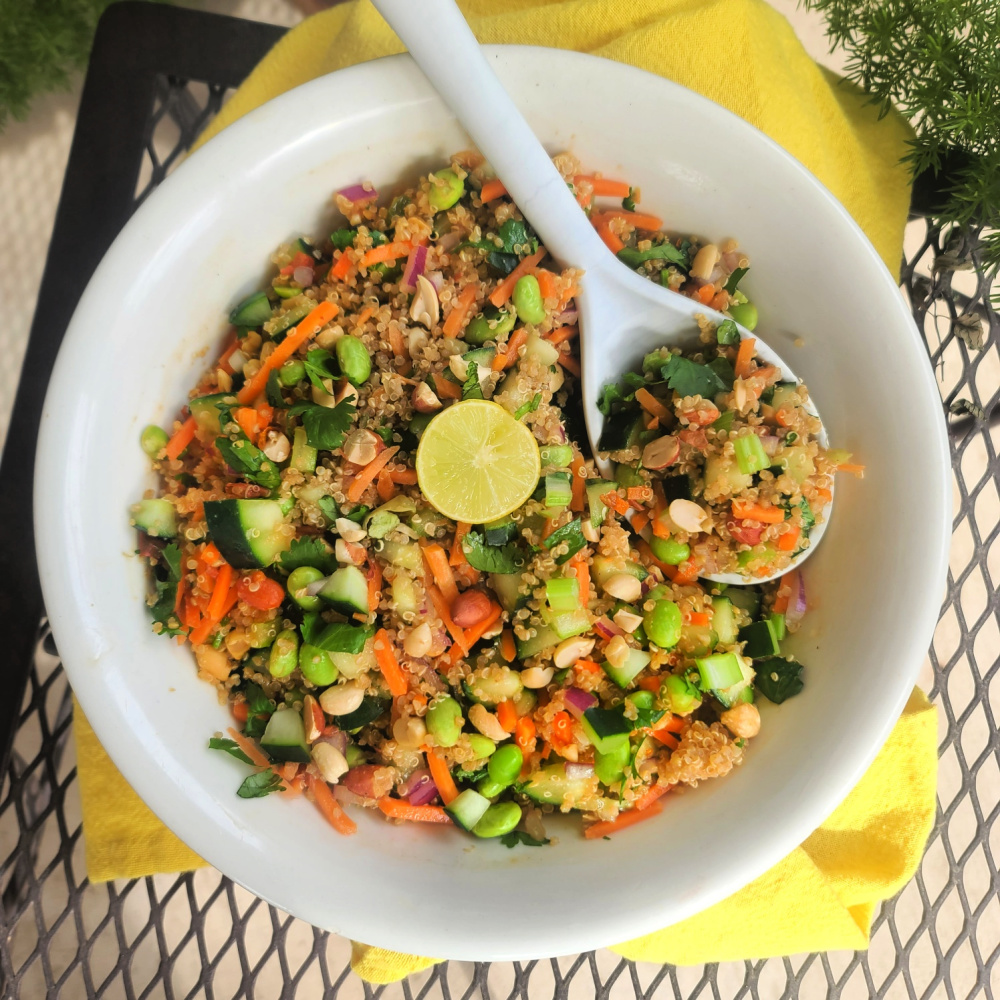
Peanut Crunch Asian Edamame Quinoa Salad, Packed with Plant Protein

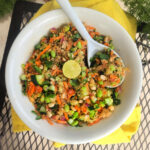
Peanut Crunch Asian Edamame Quinoa Salad is a meal that is as vibrant and colorful as it is nutritious -the perfect balance of flavor, texture, and good, clean fuel for your body. At just 193 calories per serving, it’s a smart choice for healthy eating without sacrificing taste. Plus, it’s packed with plant protein and more that 20% of your daily fiber needs to keep you satisfied throughout the day.

PLANT PROTEIN TRIO

I love it when a plant-based salad, like this Peanut Edamame Quinoa, boasts an impressive protein content—11 grams per serving—thanks to the dynamic trio of quinoa, edamame, and peanuts. Quinoa is a complete protein, meaning it contains all nine essential amino acids your body needs, making it a fantastic plant-based option. Edamame, or young soybeans, is another excellent protein source, rich in antioxidants and phytonutrients. And let’s not forget the peanuts! While they add a satisfying crunch, they also contribute a dose of protein and healthy fats, balancing flavor and nutrition. Together, these three ingredients make this salad a powerhouse for muscle repair, energy, and overall health.

FRESH VEGGIE INGREDIENTS

In addition to quinoa and edamame, this peanut crunch salad recipe is loaded with fresh, colorful vegetables that bring both crunch and a wealth of vitamins and minerals.

  • Carrots: A vibrant source of beta-carotene, which supports healthy vision and skin.
  • Cucumber: Hydrating and refreshing, cucumbers add a light crunch and are rich in vitamin K.
  • Celery: Crisp and fibrous, celery is a low-calorie addition packed with antioxidants.
  • Red Onion: Adds a zesty kick while providing vitamin C and beneficial compounds that support heart health.

These ingredients don’t just make the Asian Edamame Quinoa Salad look stunning and taste so crispy fresh, they also provide essential nutrients to keep you feeling your best. If you don’t like one of these ingredients, omit or swap – this recipe is forgiving. For example, you could do green onion instead of red onion, zucchini instead of carrot, or red bell peppers instead of or in addition to the carrots!

LOW-FAT PEANUT DRESSING

I’m all about moderation, that’s why the tangy peanut dressing uses peanut butter powder to capture the nutty flavor and creaminess without the extra fat and calories that using regular peanut butter would. This smart swap keeps the Asian peanut dressing with peanut butter powder recipe irresistibly tasty while lowering the total fat content to just 5 grams per serving  — and you still get to use chopped Spanish peanut in the salad toss.

MEAL PREPPING QUINOA SALAD

This salad isn’t just delicious—it’s practical too as are basically all high-protein quinoa salads. It stays fresh and crisp in an air-tight container (these are great, reusable meal prep containers) for up to 4-5 days in the fridge, making it a perfect option for meal prep. Whip up a batch at the start of the week and enjoy it as a grab-and-go lunch or an easy dinner side. Since it’s best served cold, it’s ideal for a brown-bag lunch, an on-the-go meal, or even a quick eat-at-your-desk solution. No reheating required—just open your container and dig in! If you’d like to make it heartier, add pre-cooked protein options like grilled shrimp, chopped chicken breast or salmon bites.

Peanut Crunch Asian Edamame Quinoa Salad
Prep Time
15 mins
Total Time
15 mins
 

Vibrant, colorful, and fun to eat! This Peanut Crunch Asian Edamame Quinoa Salad is a nutrient-packed powerhouse with only 193 calories, 11g protein, and over 20% of your daily fiber needs per serving. It's great for meal prep!

Course: entree salad, Salad, Side Dish
Cuisine: Asian, meal prep, pot luck
Keyword: edamame, peanut butter powder, peanuts, quinoa
Servings: 6 servings
Calories: 193 kcal
Ingredients
  • 2 cups COOKED Quinoa
  • 1 cup chopped cucumber
  • 1 cup shelled edamame soybeans
  • 1/3 cup chopped red onion
  • 1/3 cup chopped celery
  • 1 cup julienned carrots
  • 1/3 cup chopped cilantro
  • 1/3 cup chopped roasted Spanish peanuts
  • For Dressing:
  • 2 Tbsp rice vinegar
  • 2 Tbsp maple syrup
  • 1 Tbsp ginger paste or fresh grated
  • 2 tsp ginger paste or fresh minced
  • 2 Tbsp water
  • 2 Tbsp coconut aminos or soy sauce
  • 2 Tbsp fresh lime juice
  • ¼ cup peanut butter powder like Pbfit
Instructions
  1. Cook quinoa according to package instructions to yield 2 cups cooked.
  2. Let quinoa cool to at least room temperature.
  3. In large bowl, toss together all salad ingredients.
  4. In small bowl, whisk together dressing ingredients (alternately, you can shake up salad ingredients in a mason jar).
  5. Drizzle dressing over salad; stir well to distribute evenly.
  6. Best serve cold, in my opinion. Leftovers stay fresh covered in fridge for 4-5 days.
Recipe Notes

10 Reasons to Eat More Watermelon in 2025 + Top Tips

Note: This post is sponsored by the National Watermelon Promotion Board. You can check out their recipes, tips and nutrition/wellness information at Watermelon.org

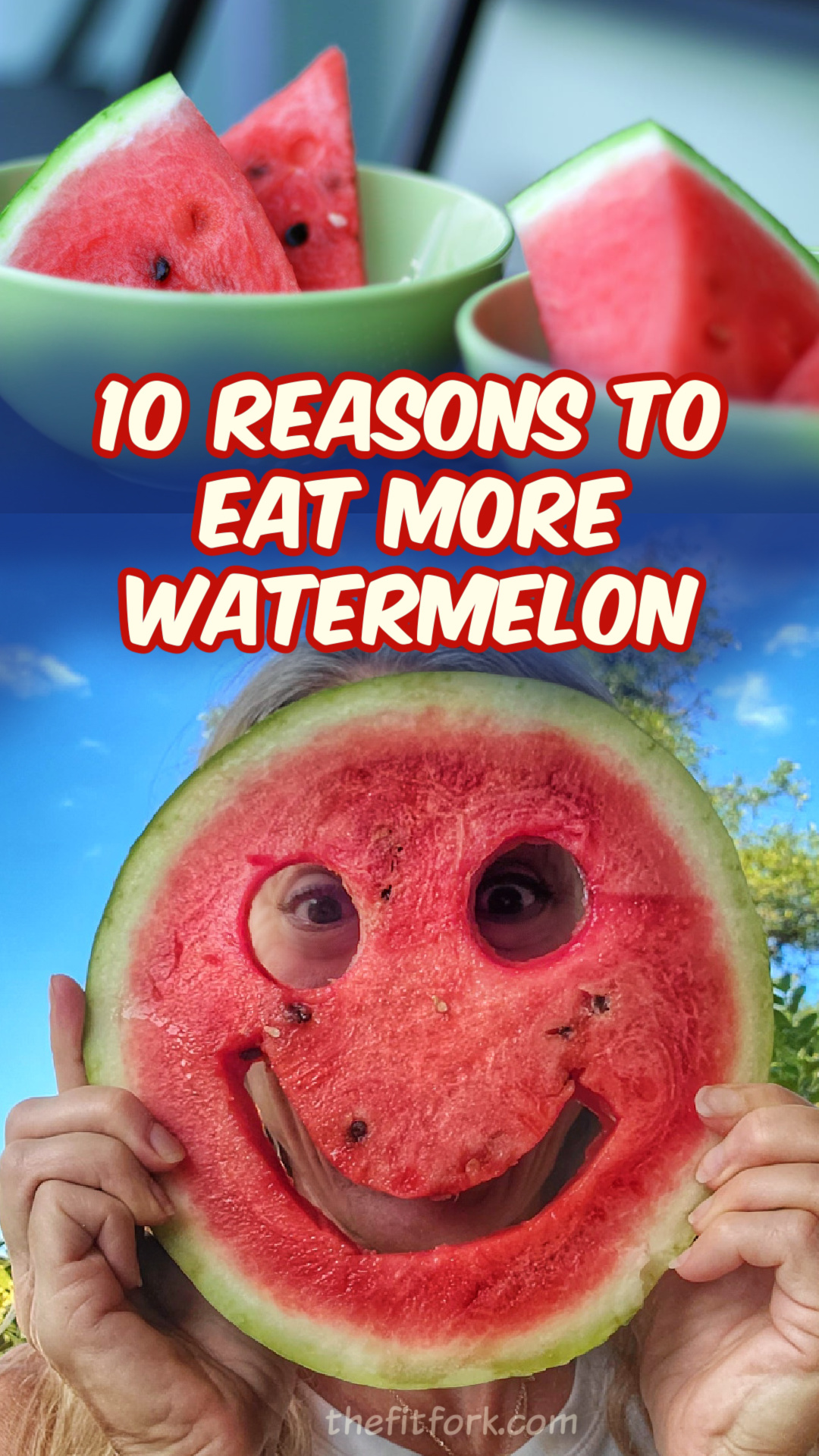
As we step into 2025, many of us are setting resolutions to live healthier, more fulfilling lives – even a “sweeter” life!  One simple yet powerful change you can make is to eat more watermelon! This juicy, vibrant fruit isn’t just delicious; it’s a nutritional champion and a versatile addition to almost any meal plan. Here are 10 reasons why watermelon should be on your plate every month this year:

Live a healthier, more fulfilling and sweeter life year-round with watermelon. These 10 reasons will motivate you to put watermelon on your plate (or smoothie cup) every month of the year.

1. Fuel Your Goals Naturally

Processed foods may provide quick fixes, but watermelon offers long-lasting, nourishing benefits. With natural sugars and key electrolytes, it’s perfect for fueling workouts or powering through a busy day.

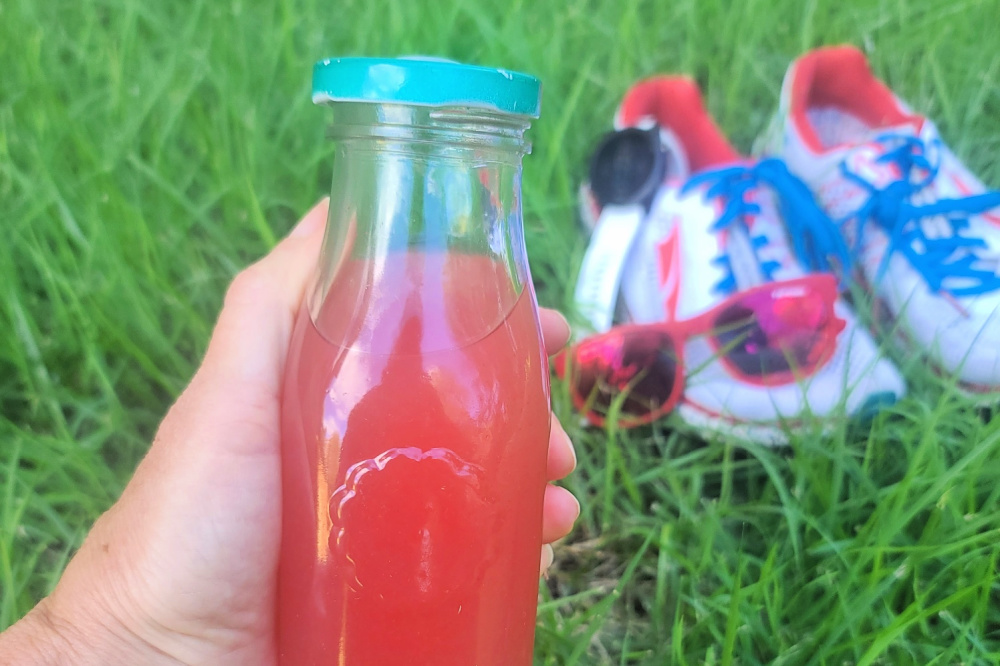
Make Watermelon-AID, a homemade sports drink featuring watermelon juice that Watermelon-AID is a homemade watermelon sports drink that will help keep you hydrated, cramp-free and provide energy for endurance events. Easy, effective and economical.

2. Satisfy Your Sweet Tooth Without Guilt

At just 80 calories per 2-cup serving, watermelon is a low-calorie, nutrient-dense treat that curbs cravings for less healthy sweets. Its water and fiber content fill you up while satisfying your sweet tooth.

3. Stay Hydrated

Watermelon lives up to its name, being 92% water. Staying hydrated improves energy, skin health, and overall well-being—making watermelon a must-have, in warm weather AND cold weather.

4. Economical and Accessible

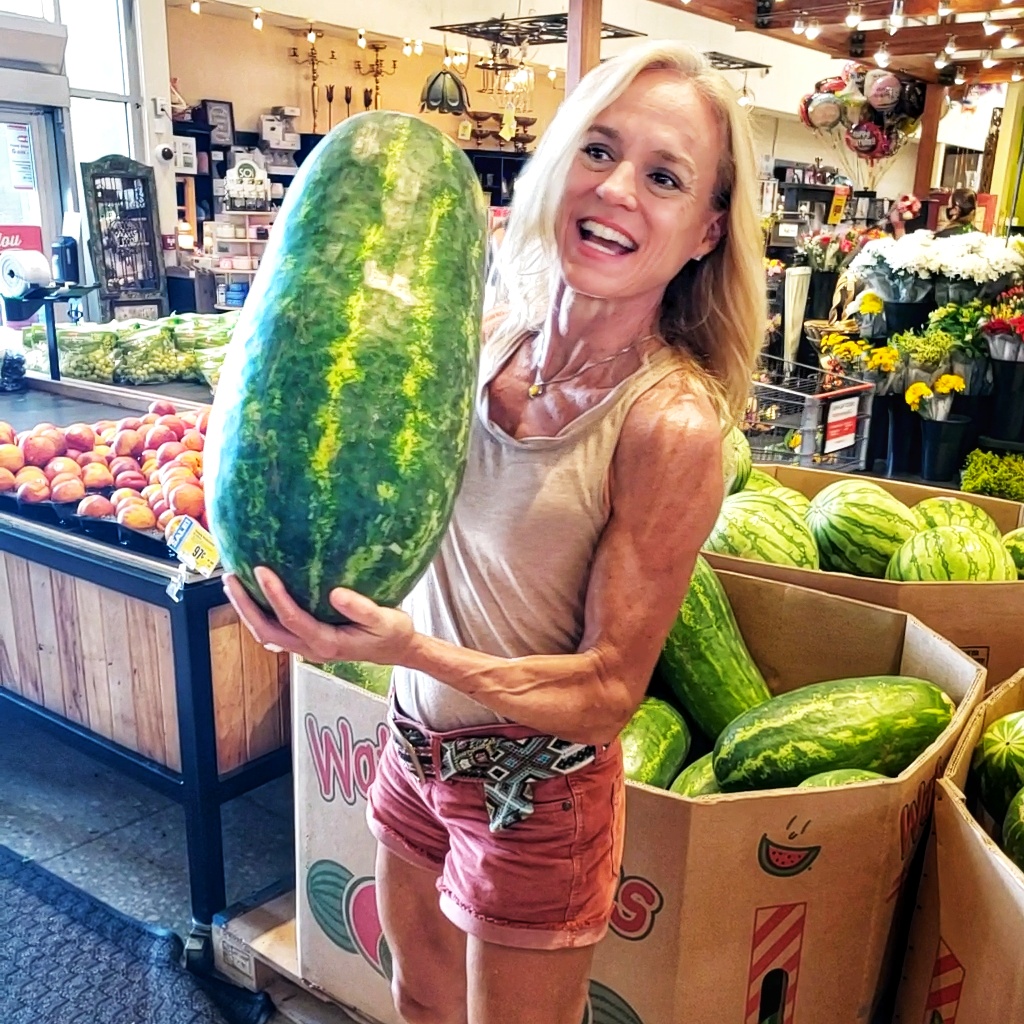
Pound for pound, watermelon is one of the most budget-friendly fruits in the grocery store. And, when you consider that you can eat the whole watermelon – the flesh, juice, seeds and even rind – it makes this fruit even more affordable.

5. A Versatile Ingredient

Watermelon isn’t just for snacking. Enjoy it in salads, smoothies, salsas, and even soups! Don’t forget the rind and juice, which can be transformed into pickles, stir-fries, or refreshing beverages. For recipe inspiration, check out my other watermelon recipes (try the search bar) and also visit watermelon.org.

6. Perfect for Meal Prep

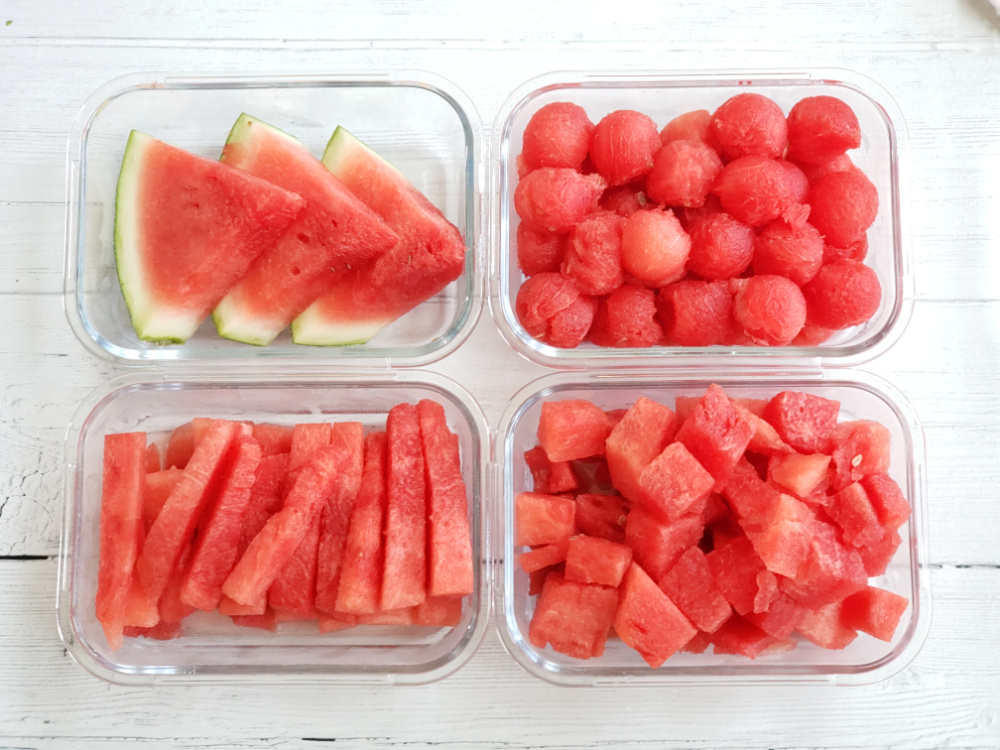
Keep pre-cut watermelon on hand to make healthy eating easier. Stash cubes in the freezer during peak season for a supply that lasts all year. Frozen watermelon works wonderfully in smoothies or as an icy snack.

7. Boost Your Vitamin C Intake

Vitamin C isn’t just for fighting colds! This essential nutrient supports skin health, aids in iron absorption, and boosts your immune system. A 2-cup serving of watermelon provides about 25% of your daily vitamin C needs.

8. A Year-Round Treat

Thanks to global trade, you can find watermelon year-round. In the fall and winter months, look for imported watermelon (it may be pre-cut) or grab a personal-sized melon. For ultimate convenience, check the freezer aisle for frozen options.

Brighten up your holiday table with this Snowman Watermelon Pomegranate Caprese Salad! Featuring festive ingredients like mozzarella, watermelon balls, grape tomatoes, and pomegranate arils, this colorful and healthy winter salad is as delicious as it is fun to make. Complete with a mozzarella snowman centerpiece, it’s perfect for Christmas parties, family dinners, or any festive occasion. Drizzle with balsamic syrup or pomegranate vinaigrette for the ultimate holiday flavor!

Learn how to make this easy Snowman Watermelon Caprese Salad!

9. Support Your Wellness Journey

A source of lycopene (12.7mg per 2-cup serving), watermelon has been studied in support of heart health even aiding in post-workout recovery. It’s a functional food that is in alignment with most of our 2025 wellness goals.

10. Create and Share Memories

Watermelon is a feel-good fruit that brings people together. Whether it’s a summer picnic or a cozy winter gathering, watermelon creates moments of joy and connection.

Tips for Eating More Watermelon

  • Prep Ahead: Slice your watermelon and store it in airtight containers for quick snacks.
  • Cut Like a Pro: Check out my favorite wat to cut up a watermelon in about 5 minutes.
  • Use the Whole Fruit: Don’t waste the rind or juice! Make pickles, smoothies, or recipes that use every part of the watermelon.
  • Freeze It: Store cubes in the freezer for out-of-season use. They’re perfect for blending into smoothies or using as ice cubes in drinks.

Make 2025 the year you embrace the joy and nourishment of watermelon. Whether it’s fueling your fitness goals or sharing memories with loved ones, watermelon has a place in every part of your life.

Live a healthier, more fulfilling and sweeter life year-round with watermelon. These 10 reasons will motivate you to put watermelon on your plate (or smoothie cup) every month of the year.

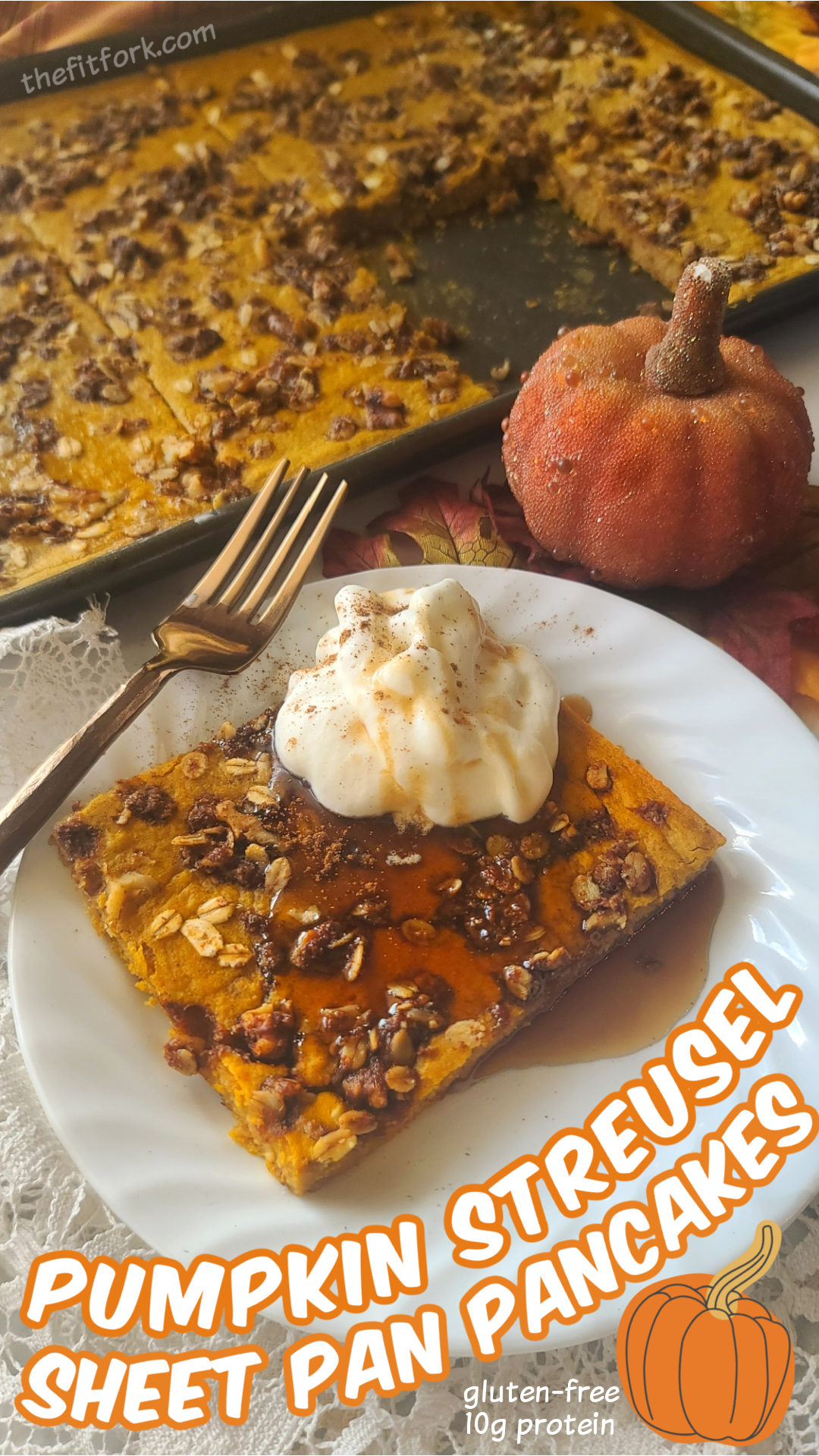
Pumpkin Streusel Sheet Pan Pancakes (Gluten-free)

Fall mornings can be hectic, but that doesn’t mean a healthy breakfast needs to be an afterthought. Pumpkin season is in full swing, and there’s no better way to celebrate than with a cozy, nutrient-packed meal that can be prepped in advance. Enter the sheet pan pumpkin pancake—a convenient, flavorful, and protein-packed way to feed a crowd or make your mornings easier with quick breakfast meal prep. After the ease of prep and first yummy bit, this will be your favorite among pumpkin breakfast recipes.

Why Sheet Pan Pancakes?

Sheet pan pancakes are a game-changer for busy mornings. Instead of flipping pancakes one by one, you can bake everything at once in a standard “half” sized rimmed baking sheet (about 17” x 13”), saving time and effort. It’s a great option for large families, meal prep, or hosting a holiday brunch. Plus, you can freeze individual portions and pop them in the toaster or microwave on rushed days.

Power Up with Pumpkin, Cottage Cheese and Oats: First, we have to fist-pump the pumpkin! Canned pumpkin is a low-cal pantry powerhouse that is rich in vitamin A (in the form of beta-carotene), which supports eye health, skin, and immunity. It also provides vitamin C, potassium, and fiber, all important for overall wellness.

Also, yay for cottage cheese! Blending cottage cheese into the pancake batter not only adds richness but also boosts the protein content. If you’re looking to start your day with a solid, satiating breakfast, this ingredient does the trick, turning them into protein pumpkin pancakes!   And, instead of traditional flour, we’re using ground oats to make gluten-free pumpkin pancakes. You can easily make your own oat flour by pulsing rolled oats in a blender. This gluten-free swap keeps the pancakes fiber-packed and light, helping to fuel you for whatever the day has in store. If you’d like it even easier, you can used packaged oat flour (the blending is already done for you).

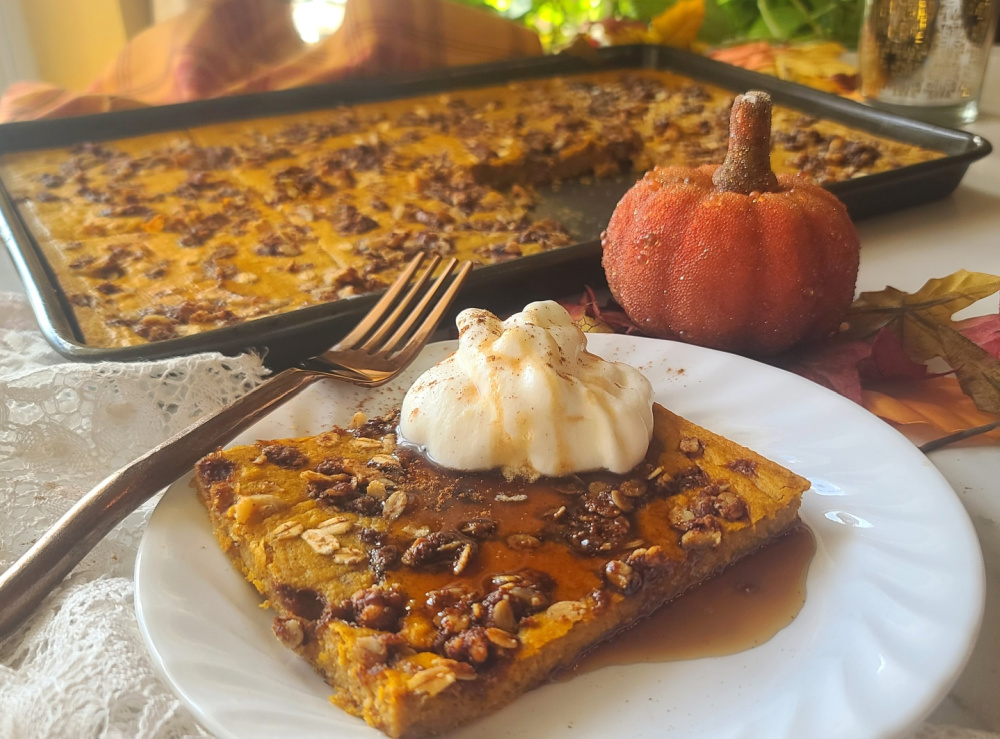
Nutty Cinnamon Streusel Topping: Fall flavors wouldn’t be complete without a little warm spice. A cinnamon streusel topping made with walnuts or pecans adds a delicious layer of crunch to these pancakes. Coconut sugar adds light sweetness. The combination of warm spices and nutty richness of this pumpkin streusel topping creates the perfect balance to the cottage cheese sheet pan pancakes and makes every bite feel like a fall treat.

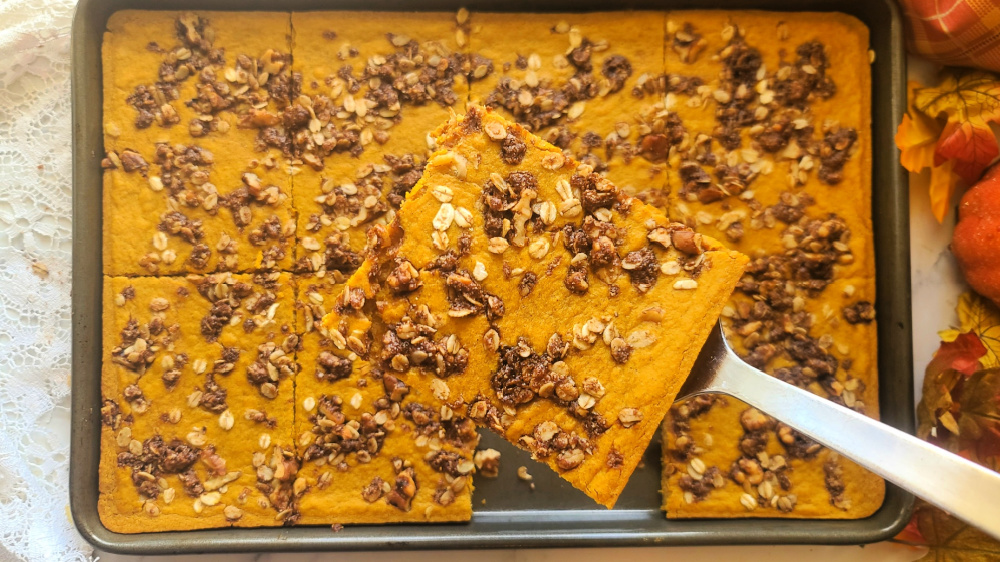
Meal Prep Friendly: One of the best parts about this sheet pan pancake recipe is that it’s meal-prep friendly. You can slice the finished sheet pan into squares (or rectangles as it may be) and then store individual servings in the freezer. When the morning rush hits, just grab a square and reheat it for a quick, wholesome breakfast. Thanks to a little coconut sugar in the batter and streusel topping, these pumpkin cottage cheese pancakes are lightly sweet enough to eat without syrup (if desired) – making them perfect for literally eating on the run.

Macros Per Serving (Serves 8): Each “square” of this pumpkin sheet pan pancake is packed with balanced nutrition: – 275 calories, 27g net carbs, 13g fat and 10g protein.

Pumpkin Streusel Sheet Pan Pancakes
Prep Time
10 mins
Cook Time
20 mins
Total Time
30 mins
 
Embrace pumpkin season while minimizing morning stress with this easy sheet pan pancake recipe! Cottage cheese blended into the batter adds extra richness and protein while the ground up oats create a gluten-free, fiber-packed flour. Plus, that cinnamon, nutty streusel topping adds a pleasing sweetness and crunch to this convenient and yummy fall breakfast. Feed a crowd, or meal prep and store in single-portion servings in the freezer for busy mornings.
Course: Breakfast, brunch
Cuisine: gluten free
Keyword: gluten free, pancakes, pumpkin, sheetpan
Servings: 8 Servings
Ingredients
Batter:
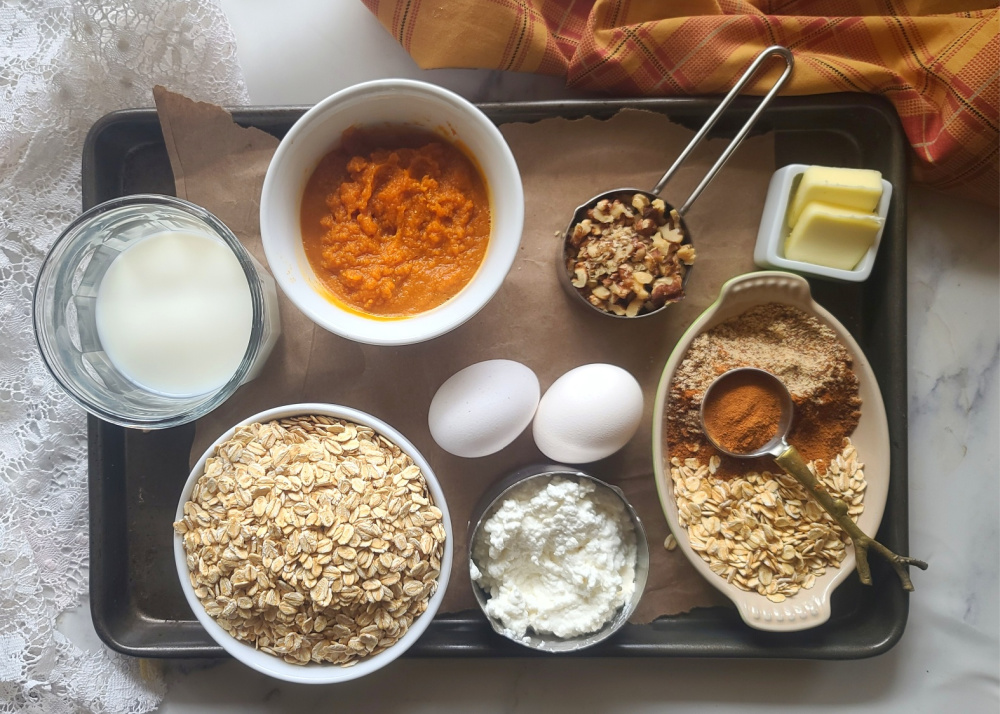
  • 2.5 cups old-fashioned rolled oats
  • 1 cup pumpkin puree
  • 3/4 cup 2% cottage cheese
  • 1 ¼ cup milk
  • 2 large eggs
  • 2 Tbsp. butter, melted
  • 2 Tbsp. coconut sugar
  • 2 tsp. baking powder
  • 2 tsp. pumpkin pie spice
  • 1/4 tsp. salt
  • Topping:
  • ¼ cup rolled oats
  • 3 Tbsp. finely chopped walnuts or pecans
  • 3 Tbsp. coconut sugar
  • 2 Tbsp. butter, melted
  • 2 Tbsp. almond meal
  • ½ tsp. ground cinnamon
  • tsp salt
Instructions
  1. Pre-heat oven to 375F.
  2. Add rolled oats to high-speed blender or food processor and process, pulsing on and off for about 45 seconds, or until a “flour” is created.
  3. Leave oat flour in blender and add remaining dry ingredients: coconut sugar, baking powder, salt and pumpkin pie spice. Pulse quickly to combine.
  4. Add pumpkin, milk, melted butter, and eggs to dry mixture and blend for 30 seconds until incorporated, scraping down sides with spatula, as needed.
  5. Pour into approximate 13” x 18” rimmed baking sheet, that has been coated with cooking spray.
  6. In medium bowl, mix together melted butter, coconut sugar, almond flour, oats, and chopped walnuts until combined and crumbly. Sprinkle this over the top of the pancake batter.
  7. Bake for 20 minutes, or until set and top is turning golden. Remove and let cool in pan for 5 minutes.
  8. Slice into 8 rectangles and serve with syrup of choice and any extra toppings (or eat plain). Can be meal-prepped by freezing in single portions and thawed and reheating when ready.
Recipe Notes

Macros: 275 cal, 27g net carb, 13g fat, 10g protein per “square”

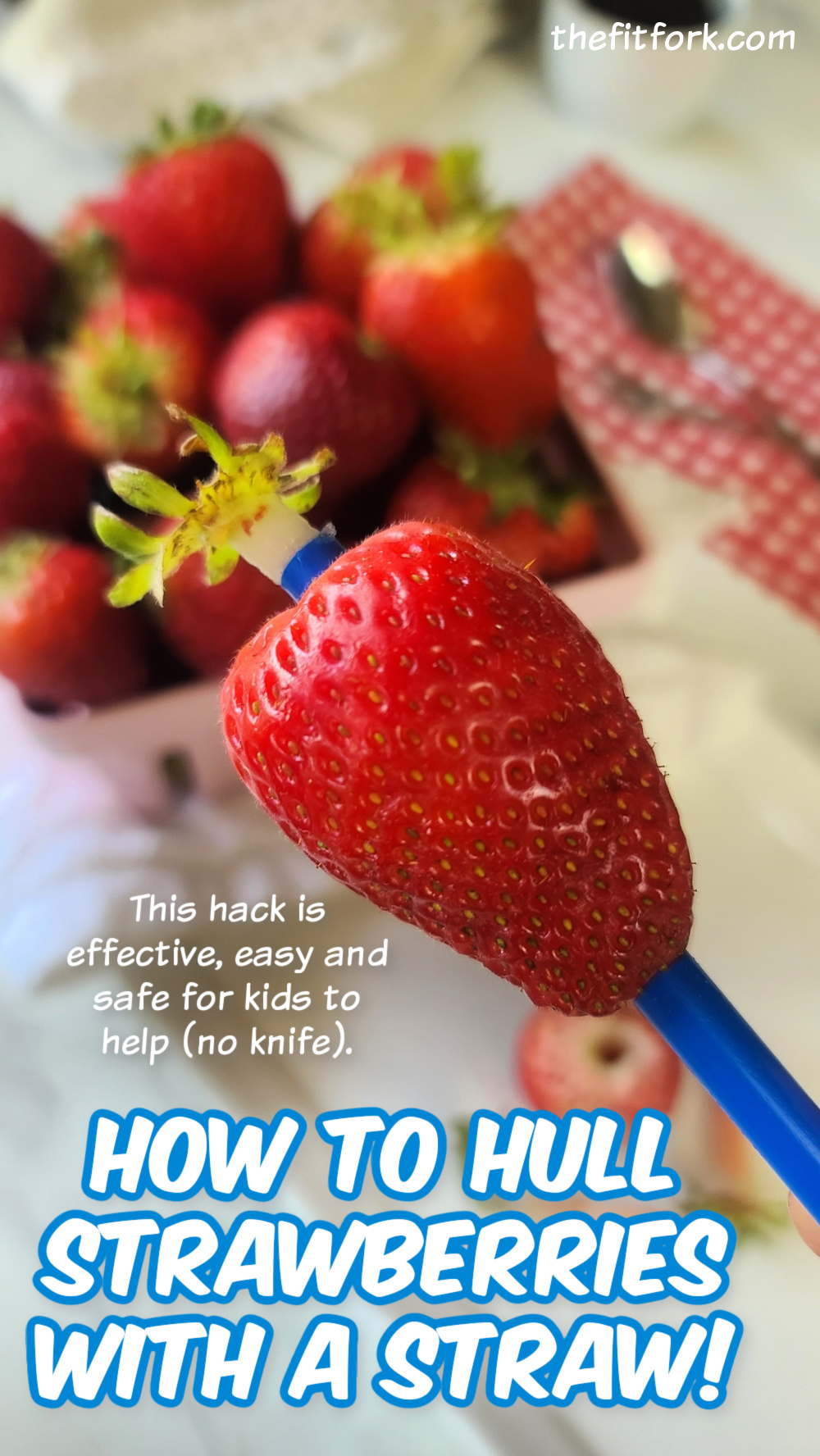
How To Hull Strawberries with a Straw: Healthy Snack Hack

Hulling a strawberry with a straw is a simple and effective method to remove the stem and the flavorless core. It’s quick, easy and efficient — especially if you are preparing a bunch of strawberries at once for a fruit tray, summer snack, or as an ingredient for recipes. Also, this strawberry hack is safe for kids — no knife needed and they will have lots of fun with the ‘chore’.

Lean how to hull a strawberry quickly and efficiently with this food prep hack that just uses a drinking straw! No knife, so safe for kids to help out making recipes and snacks.

What you need: Fresh strawberries and a straw. A sturdy straw works best, such as a metal straw or a reusable plastic straw). Even a higher-quality disposable straw (like from fast food) will work — but a paper straw will definitely NOT hold up.

HOW TO HULL STRAWBERRIES WITH A STRAW

  • Wash berries under cool water to remove dirt and pesticides.
  • Hold strawberry with one hand, straw with the other.
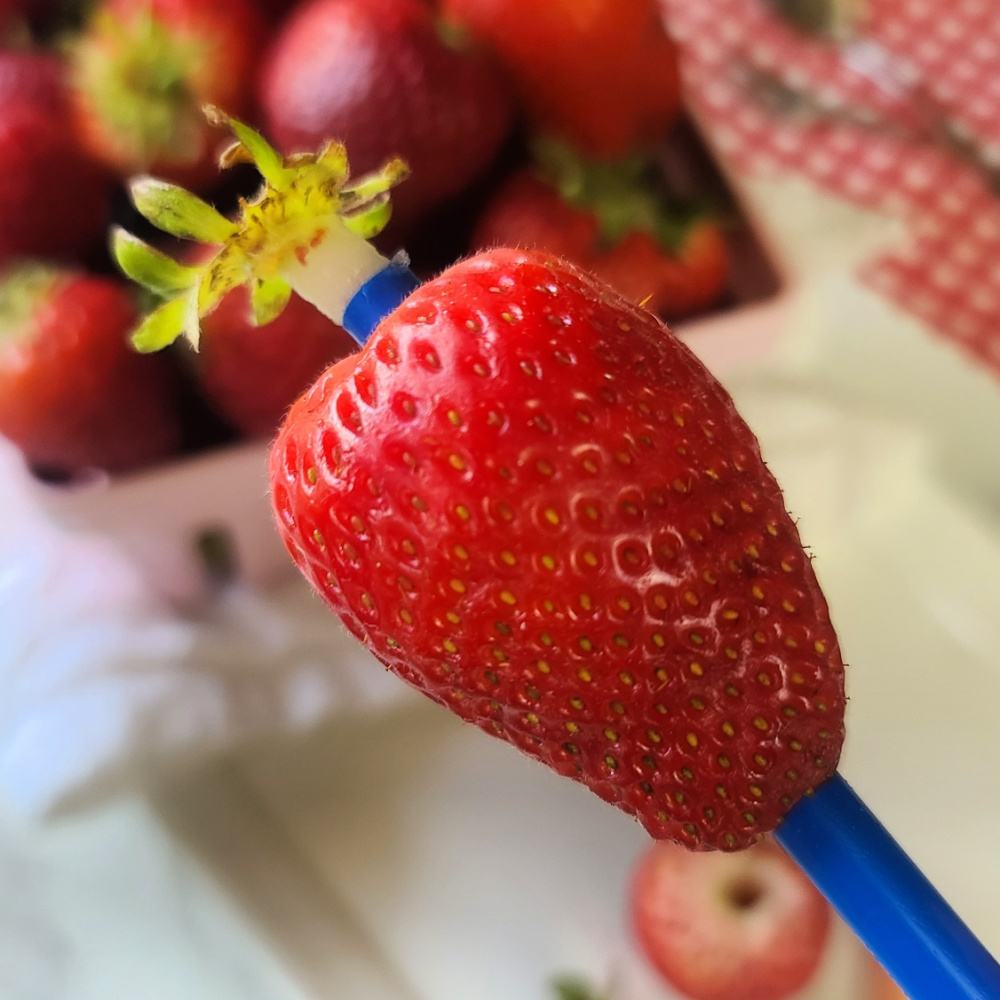
  • Insert straw into bottom of berry, directly opposite of the stem.
  • Push and/or gently wiggle straw upwards to effectively remove core and stem in one motion.
  • Pull out straw, which also removes core/stem.
  • Pull stem out of straw and repeat with remaining strawberries. Compost or toss away this part.
  • Sometimes on bigger berries, a bit of leafy section will remain. Just nip that off with a paring knife.

By following these strawberry prep steps, you’ll have perfectly hulled strawberries ready for your recipes or as a healthy snack! Washed, dried, and hulled strawberries should remain fresh for about a week if stored in an air-tight container lined with paper towels. I find the paper towels help help soak up any additional moisture and lengthen the storage time.

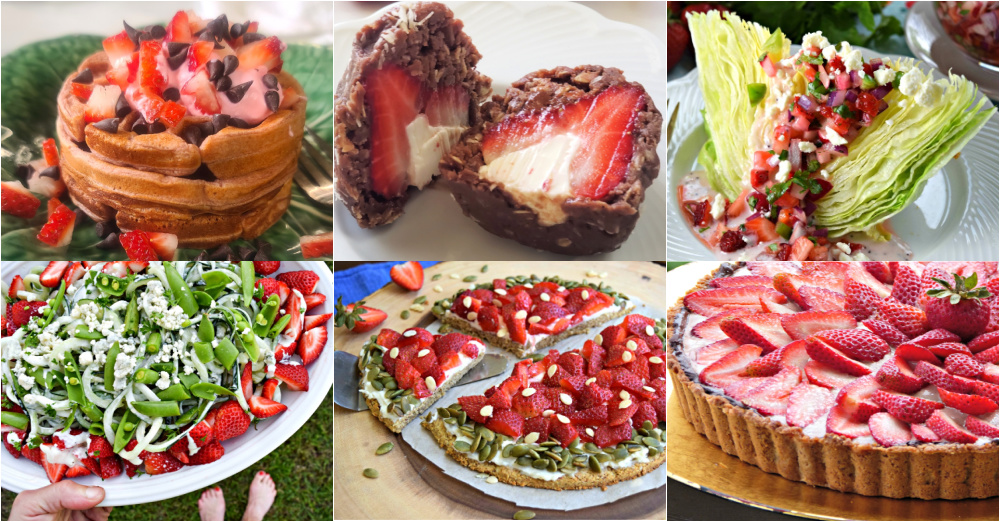
SIX STRAWBERRY RECIPES YOU’LL LOVE

Six healthy strawberry recipes you'll love all summer and beyond

Strawberry Cottage Cheese Protein Waffles

No-bake Strawberry Cheesecake Bomb for One

Spicy-Sweet Strawberry Radish Salsa on Wedge Salad

Strawberry, Cucumber & Sugar Snap Salad with Blue Cheese

Strawberry Seed Pizza

Strawberry Tart with Paleo Crust